Does CBD Oil Expire? Shelf Life and Storage
CBD oil can lose quality over time, but no single shelf-life number fits every formula. Use the date, batch, storage history, and bottle condition to decide.
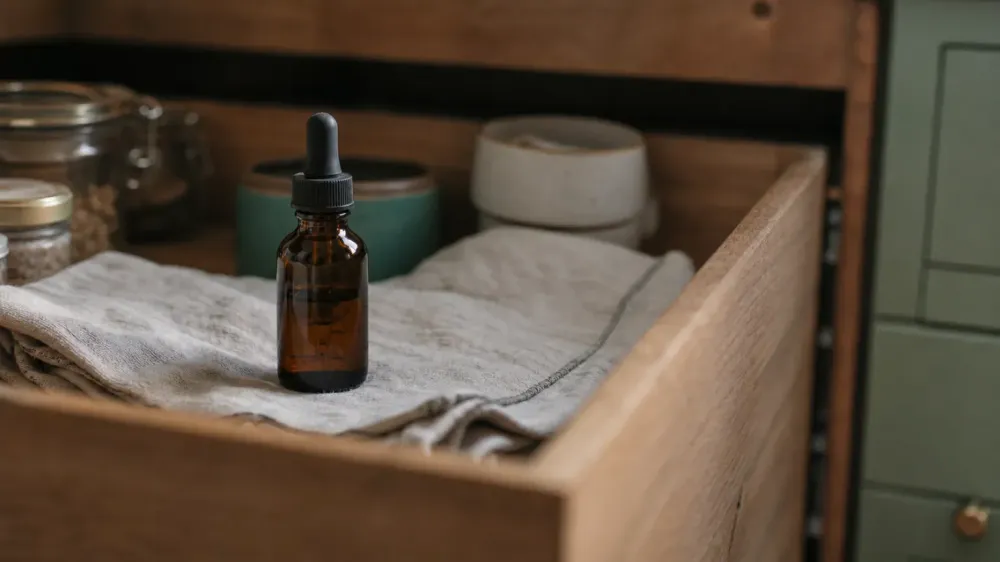
Yes, CBD oil can expire in the practical sense: over time, the formula may no longer match the quality and cannabinoid content the maker intended. The useful question is not whether every bottle suddenly turns bad on one universal day. It is whether this bottle, with this formula and storage history, is still inside the period its maker can stand behind.
That distinction matters because a CBD oil is more than cannabidiol. It also contains a carrier oil, may include flavor ingredients, sits in a particular bottle and closure, and is exposed to a different pattern of heat, light, air, and handling in every home. A sealed MCT-based formula kept in a dark cabinet is not the same product-quality problem as a half-empty sunflower-oil bottle that spent a summer in a car.
If you are new to the ingredient itself, start with what CBD is and what it is not. This guide stays narrower: how to read an old bottle, what the available stability research can actually tell us, and when guessing is the wrong move.
Start with the date, the batch, and the storage directions
Before looking at color or searching for a category-wide shelf life, read the bottle and its outer carton. Find the best-by or expiration date, the storage statement, the batch or lot number, the ingredient list, and any after-opening instruction. Those details belong to that formula. A generic article cannot know the stability data, packaging system, or ingredient limits behind it.
A date is most useful when you can connect it to a legible batch and a manufacturer who will answer questions. If the date has rubbed off, the batch code is missing, or you cannot tell whether the number is a manufacture date or a best-by date, contact the company before using the product. Send a clear photo of the label and code. Do not invent a date by counting forward from when you remember buying it.
For the product-specific stability framework and its limits, read the FDA explanation of expiration dates.
A COA cannot retest the bottle in your cabinet
A certificate of analysis can help confirm what a laboratory measured in a batch sample at a particular time. It may report cannabinoid potency and, depending on the scope, contaminants. It does not continuously monitor your opened bottle, document months of storage in your home, or prove that a formula remains within specification after its printed date. Use our guide to reading a CBD COA to verify the report, but keep the COA and the shelf-life question separate.
What actually changes as CBD oil ages
Two processes can happen at once. Cannabidiol and other compounds in the extract can degrade, so measured cannabinoid content may drift. The carrier oil and other ingredients can also oxidize or otherwise change. Which process matters first depends on the formula and conditions, which is one reason the neat answer repeated across the web is less useful than it sounds.
A 2021 laboratory stability study tested purified CBD as powder and dissolved in sunflower oil. Samples were kept in open or closed glass vials, in the dark, at 25 C or 40 C under controlled humidity for as long as one year. The oil samples were less stable than the powder, and prolonged heat plus air access produced greater losses under the tested conditions. The researchers also observed darkening and increased viscosity in oil exposed to harsher conditions for longer periods.
That study does not give every retail tincture an expiration date. It used a simplified sunflower-oil preparation in small laboratory vials, not each commercial formula in its finished package. Its 40 C condition is a stress condition, not a recommendation for a home-storage temperature. The sound conclusion is narrower: formulation, temperature, time, and air exposure matter, and heat is not a neutral place to store an oil.
A 2022 accelerated-heating study of consumer cannabis oils adds another useful limit. Researchers exposed products to 50 C for two days or 70 C for fourteen days and measured oxidation-related free radicals and cannabinoid content. The patterns differed by carrier oil, with larger cannabinoid decreases in sunflower-oil products than in the tested MCT products. Those deliberate heating protocols do not reproduce ordinary pantry aging, but they do show why formulas with different carriers should not be assigned one shared shelf life.
Use this old-bottle decision table
No sensory check can measure remaining CBD or screen for every contaminant. The goal of an at-home check is therefore conservative triage, not certification. When the history is uncertain, replacing the bottle is more defensible than trying to prove it is fine from appearance alone.
| What you find | What it means | Practical next step |
|---|---|---|
| Inside the printed date, intact seal or clean handling, legible batch, stored as labeled | The basic traceability checks pass, but this is not a potency test | Continue only according to the label and your usual safety considerations |
| Date or batch code is missing or unreadable | You cannot confirm the product-specific shelf-life boundary | Contact the manufacturer with photos; replace it if identity cannot be confirmed |
| Past the printed date | The maker is no longer representing the bottle within that labeled period | Do not extend the date yourself; ask the maker or replace the bottle |
| Seal is damaged, dropper touched another surface, or material entered the bottle | Chemical shelf life is no longer the only concern | Discard it rather than relying on a smell or taste test |
| Bottle sat in a hot car, direct sun, or near a heat source for an unknown period | The labeled storage conditions may have been exceeded | Contact the maker with the time and temperature history, or replace it |
| Unexpected odor, leakage, separation that does not resolve as the label describes, or a major change from its baseline | Something about the formula or package may have changed | Stop using it; do not taste-test a questionable product |
Color, cloudiness, and smell are clues, not lab results
CBD oils do not all begin with the same color, aroma, or thickness. Extract type, carrier oil, concentration, flavor ingredients, and temperature can change the baseline. A full-spectrum oil may naturally be darker than an isolate formula; our CBD spectrum guide explains what those categories mean. Cold oil may also flow more slowly until it returns to the temperature allowed by its label.
What matters is an unexplained change from this bottle's normal state. A new stale or rancid odor, leakage around the closure, particles that were not present before, or persistent separation deserves attention. Darkening appeared alongside degradation in one sunflower-oil stress study, but color alone could not tell you the remaining CBD content. It is a prompt to investigate, not a home assay.
Do not taste a questionable oil to settle the issue. A taste test cannot verify potency, identify oxidation products, or rule out contamination. The FDA says many nonprescription CBD products have not been evaluated like the one approved prescription CBD drug and may be of unknown quality. That uncertainty is why this guide does not promise that an expired bottle is safe or predict that it will cause harm. See the FDA consumer update.
How to store CBD oil without guesswork
The label comes first. If it names a temperature range, light protection, refrigeration, or an after-opening period, follow it. When the label only says to keep the product in a cool, dry place, choose a stable indoor cabinet away from a sunny window, stove, oven, radiator, or bathroom humidity. A car, windowsill, and kitchen shelf above the range are poor storage locations because their temperatures can swing sharply.
- 1Keep the oil in its original bottle and carton so the formula, package protection, date, and batch stay together.
- 2Close the cap promptly and fully after each use. Do not leave the dropper resting open while you do something else.
- 3Keep the dropper clean. Avoid touching it to your mouth, fingers, counter, or another liquid before returning it to the bottle.
- 4Store the bottle upright in a dark, stable location that children and pets cannot access.
- 5Write the opening date on the carton if the label gives an after-opening period or if you want a reliable handling record.
- 6If the bottle experiences a heat event, record roughly how hot and how long, then ask the manufacturer rather than assuming the date still applies.
Original packaging matters for more than neatness. A dark bottle can reduce light exposure, and the closure is part of the package the manufacturer selected. Transferring the oil to clear glass or a wide container changes both light and air exposure. It also separates the liquid from the batch code and instructions you may need later.
Should CBD oil be refrigerated?
Refrigeration is not a universal rule. Cooler laboratory conditions can slow some chemical changes, but a finished consumer formula may thicken, become cloudy, separate, or have package-specific instructions. None of the studies above proves that every retail bottle should move into the refrigerator. Follow the storage statement for your product.
If the label allows refrigeration and the maker recommends it for your situation, keep the cap closed and avoid repeated temperature cycling. If a chilled oil changes appearance or flow, do not heat it aggressively. Let it return only to the conditions allowed on the label, then check whether the change resolves as the manufacturer describes. Freezing a bottle by default adds complexity without proving that its full formula or closure was designed for it.
Frequently asked questions
Use the after-opening period or best-by date printed for that product. There is no defensible universal number for every CBD oil because carrier oils, added ingredients, packaging, stability programs, and storage conditions differ. If the label is unclear, contact the manufacturer with the batch code.
A home inspection cannot establish that an expired bottle is safe or predict harm. Chemical degradation, carrier-oil changes, handling, and contamination are separate questions. Do not extend the printed date yourself or taste-test a questionable bottle. Contact the maker or replace it.
Cold can change how an oil flows or looks, and formulas do not all behave the same way. Check the label and the manufacturer's instructions. If the change does not resolve under the allowed storage conditions, or if there is unexpected odor, separation, or debris, stop using it and ask the maker.
Not by itself. Extract type and ingredients create different starting colors, and color cannot measure remaining cannabinoid content. A major unexplained change from the bottle's baseline is a reason to check the date, storage history, seal, and manufacturer guidance.
No. A COA reports tests on a batch sample at a particular point in time. It can help verify identity and the reported test scope, but it does not retest your opened bottle after months of storage or handling.
A five-minute bottle audit
Read the date and storage line. Match the batch code to the COA. Recall any heat, sun, damaged seal, or dropper contact. Compare the oil with its normal appearance and odor without tasting it. If any part of that chain is missing, ask the manufacturer or replace the bottle. That is less dramatic than a universal expiration rule, and much more useful.
For the next step, learn how to read the batch COA, then review the broader CBD safety considerations. Storage preserves a product's intended quality; it does not make an unknown formula verified, turn a COA into a stability study, or remove the need to consider medications and individual safety.
Writing about hemp, wellness and the small rituals that keep us balanced.