Can Poppy Seeds Make You Fail a Drug Test? 2026 Cutoffs
Poppy seed foods can put real morphine or codeine in your urine. Here is how HHS, DOT and military cutoffs now differ, what controlled studies measured, why codeine changed the picture, and what the reviewing doctor can and cannot weigh.
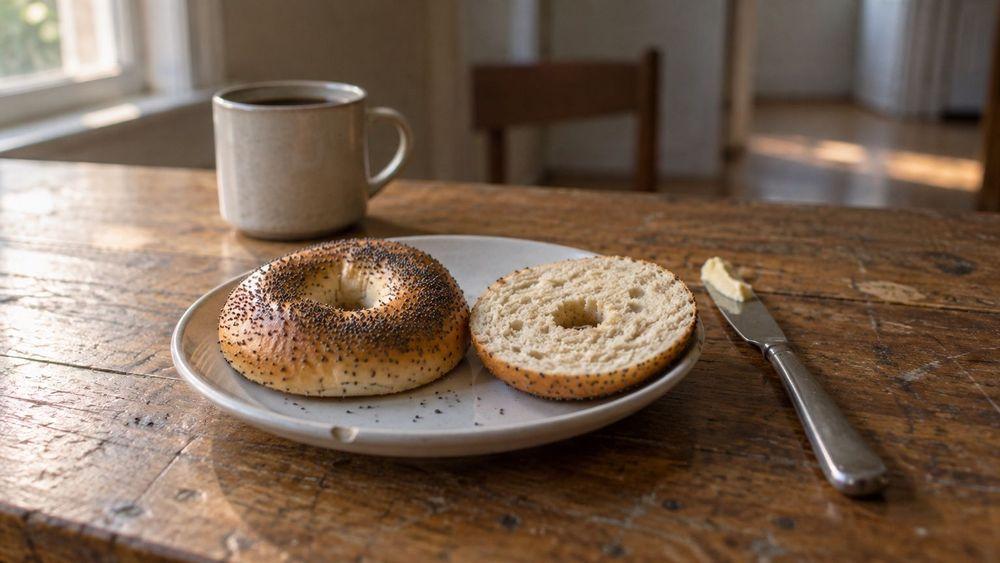
Yes, poppy seeds can put enough morphine or codeine in your urine to cross a real drug-test cutoff. Whether a poppy seed drug test result becomes a failed test depends on which program is testing you, which opiate the lab finds, how high the number is and what the reviewing doctor is allowed to weigh. No seed count, food or waiting period guarantees a result in either direction.
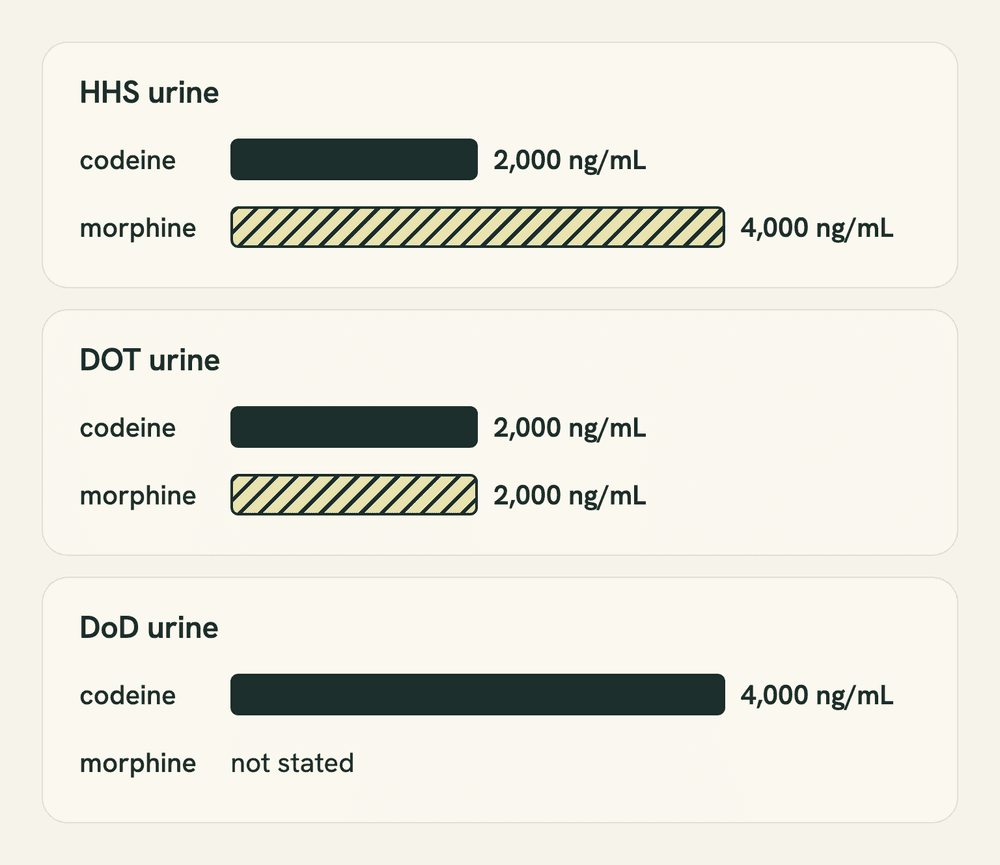
The rules also moved recently, and some pages that rank for this question have not caught up. HHS, which sets the rules for federal agency testing, raised its urine morphine confirmation cutoff from 2,000 to 4,000 ng/mL, effective February 1, 2024. DOT, which covers jobs such as commercial drivers and pilots, still listed 2,000 on November 6, 2026. The military raised its codeine cutoff. So "the federal cutoff" is no longer one number, and the person reviewing your result may be working under very different instructions depending on who ordered the test. This guide covers food exposure and opiate results only. It is general information, not medical or legal advice.
Why a food can put opiates in your urine
The opium poppy makes alkaloids, including morphine, codeine and thebaine. FDA's page on opiate alkaloids in poppy seeds explains that the seeds themselves contain little or no alkaloid, and that contamination comes from other parts of the plant. So what matters is what ended up on the seed, and that changes from lot to lot. When FDA sampled 21 products sold online in 2019, morphine ranged from 1 to 520 ppm (median 70) and codeine from 0.8 to 255 ppm (median 85). One ppm equals 1 mg per kg of seed. Those were online samples, not a survey of the grocery aisle.
FDA also says it is "not advising consumers to avoid consuming poppy seed-containing foods." That is a food-safety statement. The page does not address drug tests, so it tells you nothing about a workplace result.
Three things shape what reaches your urine, and only one of them is visible on a plate:
- The alkaloid load on the seed. You cannot judge it by eye, and it varies widely between samples.
- How much you ate and how often. Repeated meals and very large portions show up in the studies below.
- What happened to the seed before you ate it. Studies disagree on how much processing and cooking remove.
That last point is worth a warning. One lab study found that "baking had no significant effect", while a 2010 review of poppy seed foods and opiate testing reports processing losses of up to 90%. Findings conflict by method, so cooking is not a reliable filter.
It also helps to be precise about what a positive means here. This is not a lab error. When morphine or codeine came from food, it is really in the sample, and the lab reported it correctly. What may be wrong is the step from "opiate present" to "drug use". That distinction is the reason a review stage exists.
The cutoff depends on who is testing you
This issue is old. In a 1997 notice, HHS raised the opiate cutoff from 300 to 2,000 ng/mL. In the data HHS reviewed, Medical Review Officers (MROs, the physicians who review lab results) reversed 87% of laboratory opiate positives, for reasons that included prescriptions and poppy seeds. The same notice added a test for 6-acetylmorphine (6-AM), a marker for heroin, at 10 ng/mL. After one delay, the change took effect on December 1, 1998.
The next change came with the 2023 HHS guidelines. In the agency's words, it "removed the additional decision point for codeine and morphine, adjusted the confirmatory test cutoff for morphine from 2,000 to 4,000 ng/mL, and removed the additional requirement for clinical evidence of illegal opioid use." The current panel, published in January 2025, was republished with no revisions on March 13, 2026. It confirms codeine at 2,000 and morphine at 4,000 ng/mL.
| Program | Screen | Confirm codeine | Confirm morphine | How a poppy seed explanation is treated |
|---|---|---|---|---|
| HHS urine (federal agencies) | 2,000 | 2,000 | 4,000 | Not a legitimate medical explanation |
| DOT urine | 2,000 | 2,000 | 2,000 | Below 15,000: the MRO needs clinical evidence of unauthorized use. At or above 15,000: food not accepted |
| DoD urine (military) | Not stated | 4,000 | Not stated | Codeine at 4,000-10,000 reported negative if thebaine is 5 or greater |
| HHS oral fluid | 30 | 15 | 15 | Under 150: negative unless the donor admits unauthorized use. At or above 150: food not accepted |
| Clinical or non-regulated | Set locally | Reported from 300 down to 25 or lower | Set locally | Program specific |
DOT. DOT's table still lists 2,000 for both analytes. DOT proposed the same morphine change on September 2, 2025, along with removing its clinical-evidence step. As of November 6, 2026 we found no final rule on that proposal, so treat it as a proposal.
The military. The Pentagon took a different route. A memo dated February 17, 2023, as reported by Military.com, said certain varieties "may have higher codeine contamination than previously reported" and carried a warning to avoid poppy seeds. An Army article dated June 26, 2024 (Chester Curtis, army.mil article 277574) says the codeine cutoff went "from 2,000 ng/mL of codeine to 4,000 ng/mL", with results of 4,000-10,000 reported negative if thebaine is 5 ng/mL or greater. The article prints the date as March 4 with no year, and it does not state a morphine cutoff. A 2026 paper on poppy seed pastry lists DoD morphine at 4,000 as well, but that is a journal's summary, not a DoD record. We could not read a DoD record, so confirm current policy through your command.
Everyone else. Outside these programs, a private employer, court or clinic can set its own limits, and those may not match any row above. The 2026 pastry paper reports clinical cutoffs from 300 down to 25 ng/mL or lower. If you are in a monitored program or a pain clinic, assume the line may be far below the federal numbers.
What the controlled studies measured
Expert quotes saying a failed test is unlikely are easy to find. The more useful evidence comes from researchers who gave people known foods and measured the urine. The table draws on a 2014 controlled dosing study, a 2024 study of daily food over 10 days with its published correction, the 2026 pastry paper, a 2015 comparison of a roll and raw seed and a 2019 study of poppy seed paste. Read it as evidence of what can happen, not as a dose guide.
| Study | People | What they ate | Urine numbers reported | Result at workplace cutoffs | Main limit |
|---|---|---|---|---|---|
| Smith 2014 | 22 enrolled, 19 completed | Two 45 g doses of raw seed, 8 hours apart. Each dose: 15.7 mg morphine, 3 mg codeine | Peak morphine median 5,239, range 2,413-7,522 | 26.6% of 391 urines positive for morphine at 2,000. No codeine sample reached 2,000 | Extreme exposure: 90 g of raw seed in a day, swallowed as a suspension |
| Reisfield 2024 | 10 | Five foods, two people each, daily for 10 days. The two foods that tested positive: pastry at about 65-90 g a day, cake at about 110-130 g a day | Maximum codeine 13,161 | In those two foods, 65% of 60 samples codeine-positive at 2,000, none morphine-positive at 2,000, none at 15,000 | Two people per food, unsupervised days, alkaloids not measured |
| Reisfield 2026 | 15 | One bakery pastry, as much as they wanted: 66-539 g, median 182 g | Peak codeine 13,133, morphine 9,540 | At 4,000: eight codeine-positive at 8 hours, one morphine-positive through 12 hours | One product, one bakery, codeine-predominant source, pastries not assayed |
| Samano 2015 | 12 | A roll with about 15 g of seed, then the same amount raw. About 3.2 mg morphine, 0.6 mg codeine | Morphine up to 1,408 (roll), up to 4,213 (raw). Codeine up to 194 (roll), up to 664 (raw) | After the roll, 0% positive at 2,000 for either analyte. Raw seed reached 4,213 morphine | The roll's seeds were rinsed and soaked first, so it does not isolate baking |
| Özbunar 2019 | 10 | 100 g of paste over three days. Seed morphine 1.9-4.0 mg/kg | Thebaine in all samples, 6-AM in none | Positive up to 12 hours at 2,000, up to 48 hours at 300 | Turkish paste at a cultural portion size |
Smaller food studies add detail, mostly around the older 300 ng/mL level still seen in clinical settings. In a 2023 letter with 15 volunteers, five per food, 20-40% of the bagel group were positive at 3-6 hours and 0% at 24 hours. The muffin group was 100% positive at 3-6 hours and the roll group 100% positive through 24 hours. In a small 1998 study, one person who ate two rolls, with a mean of 0.76 g of seed each, peaked at 832 ng/mL morphine. A clinical cutoff is not a federal workplace cutoff, so those numbers tell you most if you are tested in a clinic.
How many poppy seeds does it take?
There is no usable number. Seed counts and spoon measures circulate online, and we could not find a study behind them. The reason is arithmetic. The same weight of seed can carry wildly different amounts of morphine. Working from the published doses, Smith's 15.7 mg in 45 g comes to about 349 mg/kg. Samano's 3.2 mg in 15 g comes to about 213 mg/kg. A 2026 Norwegian study by Midtlyng and colleagues used seed at 3.0 mg/kg, so its 30 g dose held about 0.09 mg. Two other batches of that brand tested at 15.3 and 18.0 mg/kg. The mg/kg figures for Smith and Samano and the 0.09 mg are our calculations, not figures printed by the papers.
A count that looks safe for one batch could be meaningless for the next, and you have no way to tell the two apart at a bakery counter. The 2010 review put it plainly: "a threshold of food use that would not lead to positive drug tests with certainty is currently unavailable." That review is from 2010, and we found no later study that supplies one.
Why codeine changed the picture
The older teaching was that poppy seed exposure looks like morphine, with codeine well behind it. Smith 2014 fits that: no codeine sample reached 2,000 ng/mL. When HHS explained the 4,000 ng/mL morphine cutoff in its April 2022 proposal, it cited reasonable-consumption studies with maximums of 160-3,000 ng/mL morphine and 11-390 ng/mL codeine. It described urine morphine above 4,000 this way:
“would be very rare, transient, and a consequence of unrealistic and extreme poppy seed exposure”
That statement was about morphine, and HHS kept the codeine confirmation at 2,000. The codeine-predominant studies were published after that proposal. In a 2023 study of 11 people and 10 products (correction), 6 of 33 samples (18%), from three products, were codeine-positive and morphine-negative at 300 ng/mL. The authors concluded that such results "cannot reliably be distinguished from codeine administration" using published concentrations and ratios. Portions were often larger than a label serving, and the study gives no prevalence.
The later papers raised the numbers. In the 2024 study, 39 of 60 samples from the two positive foods were codeine-positive at 2,000 ng/mL, and none was morphine-positive at that level. In the 2026 pastry study, eight of 15 people were codeine-positive at 4,000 ng/mL at 8 hours. Even a seasoning can show the pattern at much lower levels. At pain-clinic cutoffs, a 2024 letter with four volunteers using an everything-style seasoning found 18 of 40 samples screened positive at 300 ng/mL, with codeine above morphine every time and a codeine peak of 1,309. The authors describe it as non-rigorous, and all of those values sit below federal workplace cutoffs.
Here is where that leaves each program. HHS confirms codeine at 2,000 with no 15,000 step. DOT confirms it at 2,000 and keeps its 15,000 review step. The DoD moved codeine to 4,000 and added thebaine. A codeine-only result is therefore a real possibility after food, and it reads differently depending on who ordered the test.

How a poppy seed drug test result gets reviewed
A workplace result moves through stages, and each answers a narrower question. Our guide to how a 10-panel test moves from screen to review covers the general process. Here is what each stage can and cannot say about poppy seeds.
| Stage | What it can conclude | What it cannot conclude |
|---|---|---|
| Screen | Opiates may be present above the screening cutoff | Which opiate, how much, or where it came from |
| Confirmation | Which analyte is present and how much | Whether it came from food, a prescription or illicit use |
| 6-AM | A positive points to heroin. DOT requires the MRO to verify it as positive | A negative does not show that seeds were the source |
| Thebaine | Its presence fits poppy exposure, and the DoD uses it in its codeine rule | Its absence does not settle the question |
| MRO review | Applies the program's rule to the result, your prescriptions and any clinical evidence | It cannot establish what you ate. The program decides whether food counts |
A low number is not proof of seeds. In 504 morphine-positive workplace urines, 43% were under 4,000 ng/mL, a range the authors described as "consistent with poppy seed ingestion". Within that group, 22% were also positive for fentanyl and 12% for 6-AM. A low number does not prove the source in either direction.
No marker settles it. The 2010 review found "no unambiguous markers" to separate poppy food from heroin or pharmaceutical morphine. Newer candidates help but do not close the gap. A compound called ATM4G was found in urine from 16 of 22 known heroin users and in 9 of 43 suspected heroin cases, and it is a research marker, not a routine test. Thebaine was detected for up to 72 hours in one study and appeared in every sample in the paste study, but the 1998 authors found it varied and wrote that its "absence" is not necessarily a sign of opiate abuse. In both the Smith and paste studies, no specimen contained 6-AM.
The MRO step is where programs split. Under DOT's opiate rule, 49 CFR 40.139, a 6-AM result is verified positive. At or above 15,000 ng/mL urine morphine or codeine, the result is positive unless there is a legitimate medical explanation, and food must not be considered. Below that, the MRO verifies a positive only with clinical evidence of unauthorized use, such as recent needle tracks, signs of intoxication or withdrawal, or a history of unauthorized use recent enough to explain the result. The burden is on the MRO, and the employee does not have to prove an explanation. An admission of unauthorized use of the substance found can serve as evidence.
HHS urine testing now reads differently. Section 13.5(d)(2)(ii) says that eating food containing a drug, naming "poppy seeds containing codeine and/or morphine", "is not a legitimate medical explanation for a positive urine drug test result." With no legitimate explanation, "the MRO reports the positive result to the agency." A valid prescription can still support a negative report. So telling the MRO about a bagel is useful context under one rule and, as written, not an explanation under the other.
Other report types, such as a negative-dilute result, raise separate questions and say nothing about the source of an opiate.
Mouth swab and hair tests
Oral fluid. Studies show a short window, with results that depend heavily on the seed. In a study using the same two 45 g raw doses as Smith, all 17 adults screened positive at 0.5 hours. The highest values were 177 ng/mL morphine and 32.6 ng/mL codeine. At 15-20 ng/mL, results stayed positive for up to 2.5 hours, and at 30 ng/mL for up to 1 hour. In the 2015 roll study, oral fluid morphine ran 7-143 ng/mL after the roll. After raw seed, the paper's top value differs by section: about 600 ng/mL in its abstract and results, 333 in its discussion. Those peaks came within 30 minutes, and the authors note that seed left in the mouth may affect early readings. In the Norwegian study, raw seed gave 1.4-5.6 ng/mL at 0.5 hours and crispbread gave none. Those Norwegian results stayed below the 15 ng/mL federal confirmatory cutoff, in low-alkaloid seed, and other batches of that brand tested higher.
The rules differ here too. HHS sets oral fluid at 30 to screen and 15 to confirm. Under its oral fluid guidelines, a result under 150 ng/mL is reported negative unless the donor admits unauthorized use. At or above 150, food "must not be considered" a legitimate explanation. Urine lost its version of that step in 2023, and oral fluid kept it. In practice, the November 2, 2026 HHS list names no certified oral fluid lab, and private oral fluid testing is separate. Our mouth swab guide covers how these tests work for cannabis.
Hair. In the 2024 ten-day study, hair showed codeine at 41 and 51 pg/mg in two people, and none reached 200 pg/mg. In a 2005 study of 10 people who ate 150 g over 3 weeks, results were 0.05-0.48 ng/10 mg against a 2 ng/10 mg cutoff, which is 5-48 against 200 pg/mg by our conversion. Neither study reached the reporting threshold. Neither supports "never": the 2024 participants were all Caucasian, its authors caution that hair with more melanin could run higher, and the 2005 paper comes from a hair-testing company. HHS publishes panels for urine and oral fluid. Its hair guidelines were proposed in 2020, and we found no final rule as of November 6, 2026.
If you have a test coming or a result in hand
None of this guarantees an outcome, and none of it replaces advice from someone who knows your program. These steps are what the rules and studies above support.
- 1Find out which program tests you: federal agency, DOT-regulated job, military, employer policy, court or clinic. The rules differ, so ask the employer or read the policy.
- 2If testing applies to your job, leave poppy seeds out. The DoD told service members to avoid them, and the Army article calls that "the best policy." We give no number of days, because no study supports one.
- 3Tell your clinician if you take prescribed opioids or are in a monitored program, where cutoffs may be far lower.
- 4After a result, write down what you ate, when and how much, and keep the package. This is useful context, not proof.
- 5Answer the MRO's call. Give any prescriptions and the food details truthfully. They may matter in DOT testing. In HHS urine testing, food is not a legitimate explanation as written.
- 6Know what a retest can do. A split specimen checks whether the analyte is there, not where it came from.
- 7Get advice on your specifics from a union rep, an employment lawyer or, for service members, the legal office.
If a confirmed result reaches your employer, our guide to whether you can be fired for a failed test explains the next layer. The hemp version of this question is different, and the hemp seed oil drug test guide covers THC from food.

There is also a safety line that has nothing to do with testing. A 2021 analysis of poison-center and FDA adverse event reports counts, with earlier case reports included, "at least 19 U.S. deaths associated with poppy seeds in the literature". Most of the overdoses and deaths in its poison-center data involved poppy seed tea. Those are passive reports, and they are enough to take seriously.
What is still unknown as of November 6, 2026
Rules are still moving. HHS published new proposals on October 29, 2026. The urine proposal repeats the poppy seed sentence, and the oral fluid proposal repeats the 150 ng/mL structure. They are proposals, and cutoffs sit in a separate panel notice. Our explainer on the HHS proposal has the wider picture.
- Whether HHS finalizes its October 2026 text. Comments are due December 28, 2026.
- Whether DOT finalizes its September 2025 proposal. We found no final rule.
- When FDA will act. Its page says it plans a draft action level for opiate alkaloids on poppy seeds in 2026. We found none so far.
- How common codeine-predominant seed is in US food. The studies picked products and give no prevalence.
- How hair results behave in hair with more melanin. The 2024 participants were all Caucasian, and the authors caution that results could run higher.
- Whether any amount is safe for a test. No study supports a threshold, and batches differ too much for one to hold.
They can. Controlled studies have measured urine morphine or codeine above real cutoffs after poppy seed foods. Whether that becomes a failed test depends on the seed, the amount, the program and the review step. In one 10-day study, three of five foods stayed negative at 300 ng/mL and two did not. No outcome is guaranteed in either direction.
No reliable number exists. Published doses differ by more than 100-fold in morphine per gram of seed, so a count that means little for one batch could matter for another. A 2010 review said a threshold that would avoid positive tests with certainty is unavailable, and we found no later study that supplies one.
It depends on the cutoff, and these are study findings, not a schedule. In one pastry study of 15 adults who ate a median of 182 g, two were still positive at 4,000 ng/mL at 24 hours, one was codeine-positive at 2,000 at 48 hours, four were positive at 300 at 72 hours, five at 50 at 96 hours, and four still had detectable opiates at 108 hours. Other seed, foods and portions will differ.
It can, at low cutoffs. In a 2023 letter using 300 ng/mL, 20-40% of the bagel group were positive at 3-6 hours and none at 24 hours. That was a small project at a clinical cutoff, not a federal one, and it cannot predict your bagel. Seed load varies by batch, so no single food is a safe exception.
They can, briefly. After two 45 g raw doses, all 17 adults screened positive at 0.5 hours, and positives lasted up to 2.5 hours at the lowest cutoffs studied. A 2026 study with low-alkaloid seed stayed under 15 ng/mL, the federal confirmatory cutoff. Seed with more alkaloid can go much higher: a 2015 raw-seed study reported at least 333 ng/mL within the first 30 minutes.
Two studies stayed under the reporting threshold, with codeine at 41 and 51 pg/mg in two people against 200 pg/mg in the newer one. Both are small, and the newer authors caution that hair with more melanin could run higher. That supports caution, not a guarantee.
Partly. 6-AM points to heroin, and no specimen in the Smith or paste studies contained it after seeds. Its absence still proves nothing about the source, and no routine test proves you ate seeds. Thebaine fits poppy exposure but varies, and ATM4G remains a research marker.
If you are still sorting out what your test covers, start with our guide to what a 10-panel drug test looks for and how a result is reviewed.
Writing about hemp, wellness and the small rituals that keep us balanced.