What Are Rolling Papers Made Of? Fibers, Fillers and Metals
Rolling papers are wood pulp, hemp, rice or flax, plus chalk filler, a gum strip and sometimes ink. What each part does, what the only lab study of cannabis papers we found showed about colored inks, and why the paper matters less than the plant.
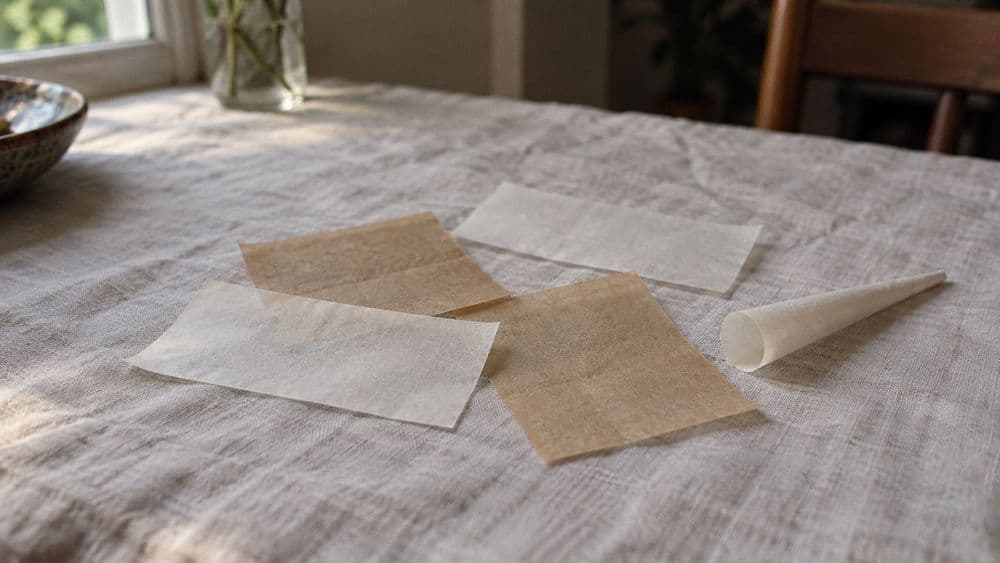
Most rolling papers are made of wood pulp, hemp, rice or flax, sometimes bamboo or a blend, loaded with chalk filler and edged with a strip of plant gum. Colored and printed papers add pigments. The only peer-reviewed lab study of cannabis papers we found showed that the biggest single driver of metal content was not the fiber but the color: copper-based inks. And the paper is a small share of what you actually burn.
You burn the paper along with the flower, so it is fair to ask what is in it. The pages that rank for this question list the same four fibers and repeat the same shop claims (rice "burns cleaner", hemp is "more natural") without citing a single measurement. We went looking for the measurements. We searched PubMed in October 2026 and found no study that measures the smoke from hemp, rice and wood-pulp papers with cannabis side by side. What does exist is one 2024 chemistry study of the papers themselves, a handful of tobacco studies on cigarette paper, and a short chain of federal and state rules. This guide, written for adults 21 and over, walks through all of it: the fibers, the additives, what the metal data actually show, what "unbleached" and "natural" do and do not tell you, and a short checklist for the shop counter. If you are weighing a paper against a wrap, our comparison of blunts and joints covers wraps; this page is about the paper itself.
What rolling papers are made of: wood pulp, hemp, rice, flax and the rest
A rolling paper is a very thin sheet of plant cellulose, the structural fiber in plant cell walls. Shop guides name four main bases. The real list is longer. In a 2024 ACS Omega analysis of commercially available cannabis rolling papers, the labels listed hemp, flax, rice, bamboo, palm, cotton mallow, even goji berry, plus generic "cellulose" and blends. Those are label claims: the lab did not check which fiber was actually in each sheet.
| Fiber | What it is | What shops and labels claim | What has been measured in cannabis smoke |
|---|---|---|---|
| Wood pulp | Cellulose from trees, the same raw material as most paper | The classic option, often described as faster-burning | Nothing fiber-specific |
| Hemp | Fiber from the stalk of the hemp plant | "Natural", slower burn, less processed | Nothing fiber-specific |
| Rice | Sold as rice paper; labels rarely say which part of the plant is used | Thinnest, "burns cleaner", less ash | Nothing fiber-specific |
| Flax or linen | Fiber from the flax plant, the same plant used for linen cloth | Slow, even burn | Nothing fiber-specific |
| Bamboo, palm, cotton mallow, goji berry, "cellulose", blends | Appeared on labels in the 2024 study | Varies by maker | Label-reported only; fiber identity not verified |
The right-hand column is not a gap in our research. It is the state of the science: we found no study that burned cannabis in hemp, rice and wood-pulp papers under the same conditions and compared what came out. Hemp paper also has a long history outside smoking, which our guide to what industrial hemp is used for covers. For rolling papers, the fiber is the part that gets the most marketing and the least data.
What else is in a rolling paper
Paper is an engineered product, not just pressed fiber. A 2014 review of cigarette paper engineering lists the levers manufacturers pull: how porous the sheet is, burn additives, basis weight (grams of paper per square meter), calcium carbonate filler and catalysts. That review is about cigarette paper, not rolling paper, but the toolbox is the same. Here is what actually turns up in rolling papers, and what each part does.
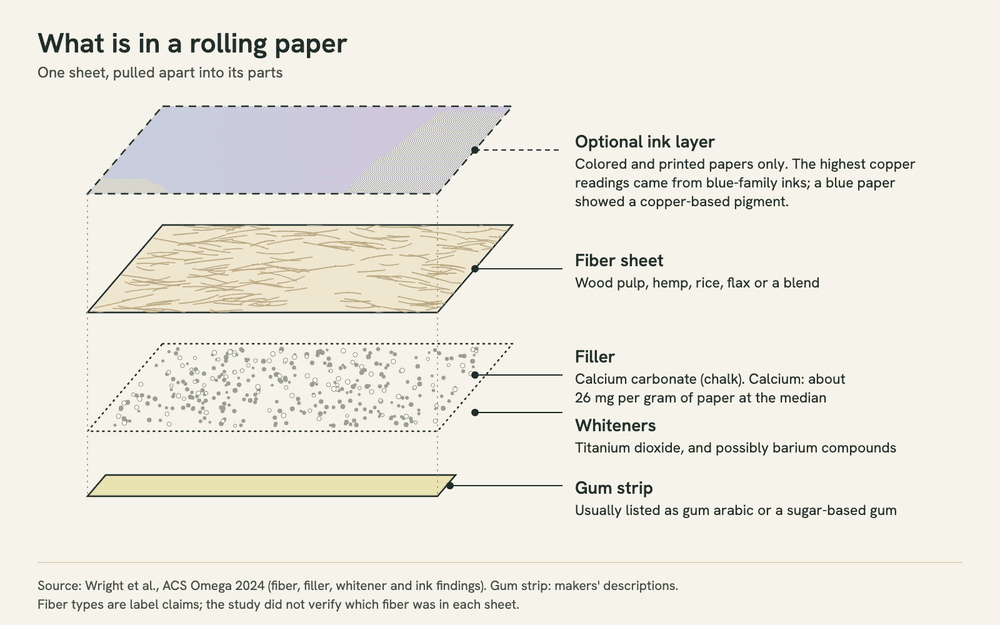
Calcium carbonate (chalk). The main mineral filler. In the 2024 study, calcium was by far the most abundant mineral, about 26 mg per gram of paper at the median, which the authors attribute to calcium carbonate. Chalk also changes what the ash looks like: a 1998 US patent on cigarette paper ash reports that a calcium carbonate filler gave "a whiter ash" and notes that a whiter ash looks more appealing to buyers. That is one reason ash color says little about your flower (more in our white ash vs black ash explainer).
Titanium dioxide and barium compounds. Whiteners and opacifiers. Under the microscope, the yellow and red cones in the 2024 study were colored over a titanium dioxide base, and the authors suggest barium compounds may also be used for whitening.
Burn salts (citrate). Factory cigarette paper is dosed with citrate salts to keep it burning. A 2003 Tobacco Control test of hand-rolling papers found under 0.08 mg of citrate in a hand-rolling paper versus 0.3 to 0.8 mg in manufactured cigarette paper, and none of 40 hand-rolled cigarettes burned their full length when left alone, against all 40 of each manufactured brand. That was tobacco, one paper brand and 2003, but it helps explain why hand-rolled papers go out on their own more often.
Bleach. White papers are bleached; brown ones are not. "Bleached" today usually means chlorine dioxide (called ECF, elemental chlorine free) or oxygen and peroxide (TCF, totally chlorine free), not the elemental chlorine that US bleached-kraft pulp mills had to replace with chlorine dioxide under the EPA's 1998 Cluster Rule. Many papers are imported, so that rule describes US practice, not your booklet. We found no measurement of bleaching residues in rolling papers.
The gum line. The sticky strip is usually described by makers as gum arabic (acacia) or a sugar-based gum. Gum arabic is a dried tree exudate that FDA lists as safe for use in food, in uses such as drinks, candy and stabilizers. Food status says nothing about burning and inhaling it, and we found no study of rolling-paper glue.
Inks and pigments. Colored and printed papers carry pigments. This is where the 2024 study found its clearest signal, covered in the next section.
Flavor coatings. Some papers are sprayed with flavor. The 2024 study noticed that several flavored samples were among the higher zinc readings but called that evidence inconclusive, and we found no study that analyzed the flavor coatings themselves.
Cone tips. Pre-rolled cones often come with a built-in tip. In the 2024 study, the shiny gold and silver tips were PET plastic carrying antimony, a catalyst used in making that plastic. The roach and the plain filter tip are their own topic, covered in our guide to what a roach is and why people use tips.
Do colored or flavored papers contain metals? The 2024 study, read carefully
In 2024, chemists at Lake Superior State University bought 53 papers, wraps and cones from four Michigan shops (purchased February to June 2022, with store managers pointing them to popular products) and measured 26 elements in each using ICP-MS, a lab method that detects metals at trace levels. The paper is the only peer-reviewed analysis of cannabis rolling papers we could find, and it does not name brands. Its opening line is blunt: "The elemental composition of rolling papers is largely unregulated."
Copper was the standout. Across all samples, copper had a median of 2.9 µg per gram (µg is a microgram, a millionth of a gram), a mean of 31 and a maximum of 251. That gap between median and mean tells you most papers were low and a minority were very high. The high ones were colored: every sample above 30 µg/g was blue or carried a color that can contain blue, such as green, purple or black, and when the team examined a blue paper under the microscope, they found a copper-based pigment. A blue cone held 251 µg/g and a rainbow cone 243, while the yellow and red cones were under 1 µg/g, because they were colored with titanium dioxide and, in the red one, a strontium-salt dye instead. A single paper from the highest-copper product held 71 µg of copper, more than twice the daily limit that US Pharmacopeia standards set for inhaled medicines, before any cannabis went in.
| Element | What the study found | What it points to |
|---|---|---|
| Calcium | Median 26 mg/g, mean 31, max 116 mg/g | Chalk filler, per the authors |
| Copper | Median 2.9 µg/g, mean 31, max 251; about 1 in 4 above 30 | Colored inks: blue, or colors that can contain blue (green, purple, black) |
| Chromium | Max 8.5 µg/g | Flagged as a concern; not explained by color |
| Vanadium | Max 5.3 µg/g | Flagged as a concern; not explained by color |
| Lead | 3 samples above 0.5 µg/g (max 1.2) | Above California's limit for finished inhalable cannabis |
| Mercury | 2 samples above 0.1 µg/g, both under 0.2 | Above California's limit for finished inhalable cannabis |
| Arsenic, cadmium | None above California's limits | No exceedance |
| Silver | 38 µg in one "24k gold" product | More than 5 times the ICH daily figure for inhalation |
| Antimony | Present in shiny PET plastic cone tips | Catalyst residue in the plastic |
Color was the biggest single driver, not the only one. The study's abstract names copper, chromium and vanadium as the elements that "may present a potential hazard to frequent users", and chromium and vanadium were not explained by color; the authors point to possible sources in soil, air, water or processing. Three samples had more lead than California allows in a finished inhalable cannabis product (0.5 µg/g), and two had more mercury than its 0.1 µg/g. The metallic cone tips were plastic with antimony, and the authors suggested replacing them with "clean paper as a sound precautionary measure." The one "24k gold" product also carried 38 µg of silver, more than five times the ICH daily figure for inhalation, though the authors note the metal may be relatively inert.
Now the headline number, with its limits attached. For heavy daily users of copper-inked papers, the authors estimated exposure could reach 4.5 to 11 times pharmaceutical limits. That is a worst-case model from paper content, not a measurement of smoke, and the authors call for real smoking studies. The model assumed 2 g of cannabis a day ("heavy") or 5 g a day ("very heavy"), counted the entire paper as inhaled and made no correction for ash or unburned paper; the authors themselves call it "a maximum exposure model" and note that typical daily users smoke about 1 to 2 g a day. The yardsticks were the US Pharmacopeia and ICH Q3D limits for metals in inhaled medicines. Those are drug standards the authors used as a reference point, not laws that apply to rolling papers. Their practical conclusion was simple: dropping copper inks "would eliminate all cases where smoking the papers alone may potentially exceed USP and ICH Q3D daily exposure limits."
Hemp vs rice vs wood pulp papers: what actually differs
On the fiber question, the honest answer is that nobody knows. The burn-rate and "cleaner smoke" claims you see on shop pages are untested in cannabis. What has been shown, in tobacco, is that the physical build of a paper matters. When FDA reviewed one roll-your-own paper in 2020, it treated an 11% lighter, more porous sheet (218% higher air permeability than the earlier paper it was compared with) as something that could change tar, nicotine, carbon monoxide and benzo[a]pyrene in the smoke. In that case the maker's test cigarettes came out lower on tar, nicotine and carbon monoxide, and FDA found the new paper substantially equivalent to the old one. That review covered one product used with tobacco. Notably, the ingredient details in it are redacted in the public record, which tells you how little of this reaches the buyer.
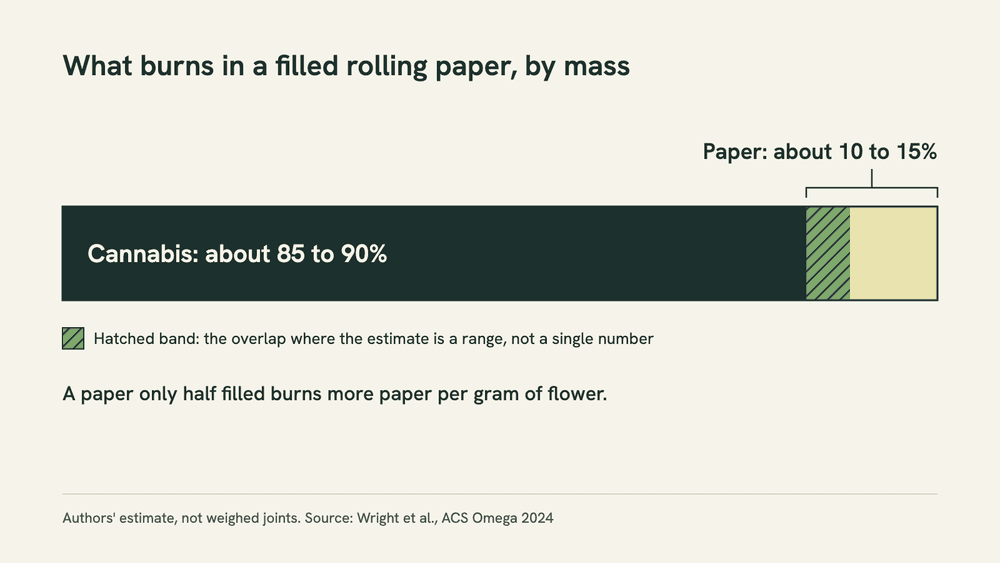
The other variable is simply how much paper you burn. By the 2024 study authors' estimate, the paper is roughly 10 to 15% of what burns in a full joint, and more if a large paper is only half filled, which the authors suggest many people do. So the measurable differences between papers come down to three things: how much paper there is per gram of flower, whether it is inked or printed, and whether it carries a metallic or plastic tip. The fiber name on the booklet is not one of them, at least not on current evidence. If a shop tells you rice burns cleaner, it is fair to ask for the measurement. We could not find one.
Bleached, unbleached, "natural" and "organic": what the labels mean
Brown paper means unbleached. It does not mean uninked, unfilled or gum-free; an unbleached paper still carries filler and a gum strip, and some brown papers are printed. The 2024 cannabis study did not compare bleached with unbleached papers, so there is no rolling-paper data showing unbleached sheets carry fewer metals. The closest evidence is tobacco research. In a 2019 Spanish study of 257 tobacco, paper and filter samples, bleached, flavored and fast-burning papers contributed higher levels of toxic elements, and the authors concluded that the paper used in roll-your-own cigarettes may significantly change the elements a smoker is exposed to. That was tobacco research, but it points the same way as the cannabis study: extras on the paper can add exposure.
"Natural" has no testing behind it. In 2020 focus groups with 50 Scottish roll-your-own smokers, "natural" papers were seen as the healthier choice. Nothing in the papers' chemistry was tested to back that up. The same research team notes that Canada and Israel now require plain rolling papers. An "organic" claim, where it appears, describes how the fiber was grown; it tells you nothing about the filler, the gum, the ink or the smoke.
Does the paper or the plant matter more?
The plant, by a wide margin. If the paper is roughly 10 to 15% of what burns, the other 85 to 90% is cannabis, and its smoke is heavy on its own. When Health Canada scientists machine-smoked cannabis and tobacco under the same conditions, cannabis smoke carried up to 20 times the ammonia of tobacco smoke and 3 to 5 times the hydrogen cyanide and nitrogen oxides. And how people smoke adds to it: in a 1988 NEJM study of 15 men who smoked both, a marijuana cigarette delivered about three times the tar of a tobacco cigarette, and the men took puffs about two-thirds larger, inhaled about a third deeper and held their breath about four times longer. Our article on why weed makes you cough explains how those irritants trigger the airways.
Animal data point the same way. In a 2016 rat study, one minute of secondhand cannabis smoke impaired blood-vessel function for at least 90 minutes, and it did so even with no rolling paper in the burn and with cannabis that lacked cannabinoids. Rats are not people, and the study measured one vascular endpoint, but the point stands: the plant's smoke is the main event, and changing papers does not change that. If what you want is to take combustion out of the picture, our comparison of dry herb vaporizers and smoking covers what changes when nothing burns, and what the evidence does and does not show.
“Impairment occurred even when marijuana lacked cannabinoids and rolling paper was omitted.”
The rules: FDA, age 21 and pre-roll testing
Federally, the rules that reach rolling papers come from tobacco law, not cannabis law. FDA's 2016 deeming rule states that rolling papers "intended for use with cigarette tobacco or roll-your-own tobacco" are already under its tobacco authority because they are components of cigarettes. Since December 2019, federal law bars retailers from selling any tobacco product to anyone under 21, and "tobacco product" includes components such as papers sold for tobacco. That is why papers sold for tobacco sit behind the same ID check. FDA has not addressed papers sold only for cannabis, and state rules can add to the federal floor. Wraps follow a similar logic, which our blunt vs joint guide explains.
On the cannabis side, the state testing rules we found cover finished cannabis products, not a booklet of papers sold on its own. Pre-rolls are different in some states. In California, licensed pre-rolls are tested after rolling, so the paper is part of the sample that has to clear the state's metal limits for inhalable products: 0.2 µg/g for cadmium, 0.5 for lead, 0.2 for arsenic and 0.1 for mercury, and a failed sample keeps the whole batch off shelves. The 2024 study authors note that Michigan, where they bought their samples, does not require this final-form test if the flower already passed. They also describe a 2020 California lab report in which pre-rolls made from flower that had passed testing failed on heavy metals, with the papers as the source. That report was never peer-reviewed. As with other contaminants, you cannot see metals in paper, which is why our guide on how to tell if weed is laced keeps coming back to lab testing over appearance.
Five checks before you buy papers
None of these makes smoking safe. They are ways to add fewer unknowns to something that already carries risk, based on what the evidence above actually found.
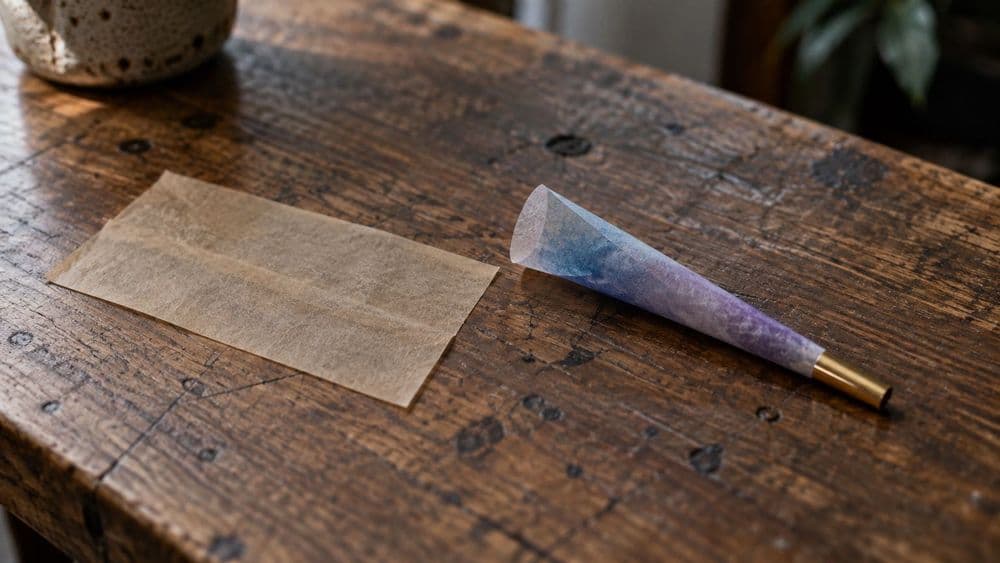
- 1Choose uncolored, unprinted paper. Copper tracked colored inks in the only cannabis-paper study we found, and the label will not tell you which pigment was used.
- 2Skip metallic or plastic tips and "gold" papers. The shiny cone tips were PET plastic with antimony, and the "24k gold" product carried silver.
- 3Look for a material and ingredient disclosure: fiber, filler, gum and whether any ink is used, on the pack or the maker's site. A maker that discloses more is giving you something to check.
- 4Prefer a stated bleaching method: unbleached, ECF or TCF. There is no rolling-paper data to rank them, so treat this as a disclosure signal rather than a health guarantee.
- 5Skip flavor coatings. We found no analysis of the coatings themselves, and in tobacco research flavored papers carried more toxic elements.
One more buying note: match the paper size to how much you actually use. The study authors point out that a large paper only half filled means more paper burned per gram of flower. The habit behind all five checks is the same one we recommend for anything you put in your body: ask for the ingredient record and the lab data, as in our guide to choosing a CBD oil by its label and lab report.
Burning any paper adds smoke, but by the 2024 study authors' estimate the paper is roughly 10 to 15% of what burns in a joint, and cannabis smoke is the larger exposure. The extra concern the only lab study we found could measure came from colored inks, a few elevated metals and plastic cone tips. No paper makes smoking safe.
We found no study comparing their smoke with cannabis. The claims that rice burns cleaner or hemp is healthier are untested. What the evidence does support is choosing plain, uncolored paper without a metallic tip, and not burning more paper than you need.
Makers usually describe the gum strip as gum arabic (acacia) or a sugar-based gum. FDA lists acacia as safe for use in food, but food status says nothing about burning and inhaling it, and we found no study of rolling-paper glue either way.
Some do. In the 2024 study, every sample above 30 µg of copper per gram was blue or a color that can contain blue, up to 251 µg per gram in a blue cone, while the yellow and red cones used titanium dioxide and other colorants and stayed under 1 µg/g. Not every colored paper is high, and the label will not tell you which ones are.
Unbleached means no bleach, not no ink, filler or gum. No study we found shows lower metals in unbleached rolling papers. A 2019 tobacco study found bleached and flavored cigarette papers contributed more toxic elements, which is suggestive but not cannabis data.
Yes. Calcium carbonate filler can whiten ash, so ash color reflects the paper as much as the flower. Our white ash vs black ash explainer, linked in the additives section above, covers why ash is a poor quality test.
For papers sold for use with tobacco, yes: they count as tobacco components under federal law, and the federal minimum age for tobacco products has been 21 since December 2019. FDA has not addressed papers sold only for cannabis, and state rules vary, so check your state's law.
Rolling papers rarely list what is in them, and even FDA's public review of one paper redacts its ingredient details. For contrast, Planntz publishes a third-party certificate of analysis for every batch it sells. If you want to see what a full, batch-level lab record looks like, browse Planntz's lab results, and our guide on how to read a COA walks through each section.
Writing about hemp, wellness and the small rituals that keep us balanced.