Did George Washington Grow Weed? His Hemp Records, Read
George Washington grew hemp at Mount Vernon. We read the 1765 diary line and the 1794 letter behind the weed myth, show where the famous misquote comes apart, and face the 1796 line about India hemp that his letters leave unexplained.
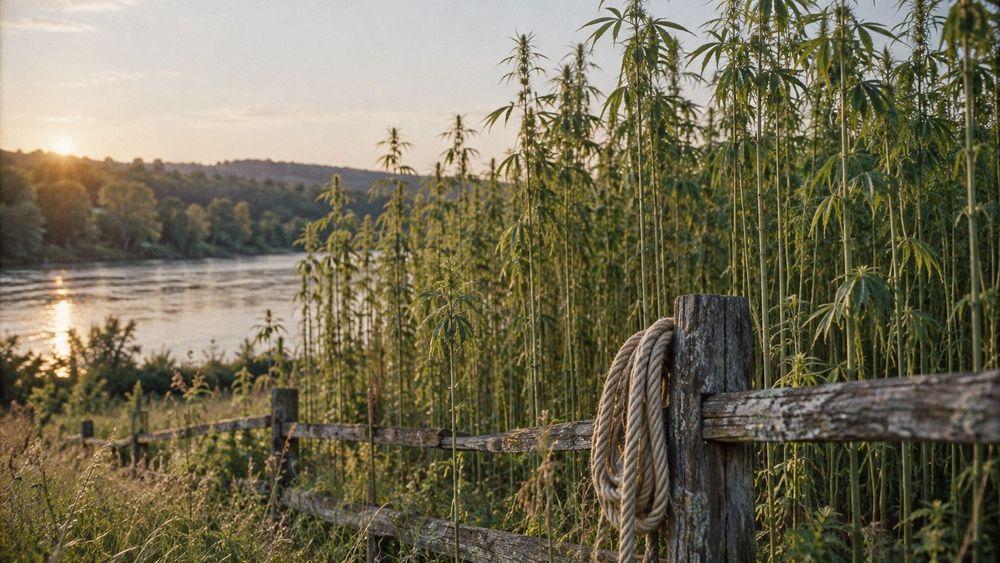
Did George Washington grow weed? He grew hemp, and the record of it is long: his diaries and letters show it sown, pulled, rotted in water and saved for seed, and he asked what it would earn. In the five printed volumes we searched, we found no document showing he grew it to smoke. Nobody measured the THC in his plants, so its potency is unknown. One late letter calling an imported seed "more valuable than the common Hemp" stays unexplained.
Two documents carry most of the "Washington grew weed" story: a 1765 diary line about male and female plants, and a 1794 letter about "India hemp" that keeps getting misquoted. This page prints both, then the harder letter of 1796, from John C. Fitzpatrick's editions of George Washington's papers. Odd spellings inside quotation marks are the printed text. If you came for the plant and the law, start with what actually separates hemp from marijuana.
Did George Washington grow weed, or hemp?
Start with what is not in dispute. Mount Vernon's hemp page, as reproduced by CelebStoner in 2022, says "Washington's diaries and farm reports indicate that hemp grew at all five farms which made up Mount Vernon". Dean Norton, then the estate's director of horticulture, told the Associated Press in 2018 that hemp comes up "more than 90 times in his journals and diaries", a staff estimate rather than a published count. Mount Vernon's website also rejects the claim that he grew marijuana, according to search-result summaries of the page. The page itself would not load for us.
The uses were practical. The Zebra's June 2018 report on the estate's replanting lists "rope, thread for sewing sacks, canvas, and for repairing the seine nets", which are large fishing nets, and AP adds "clothing that might be worn by the slaves". Our guide to what hemp is used for today covers where that kind of fiber goes now. The sources we read do not say who did each task in the fields, so read "grew" here as shorthand: he owned the crop and gave the orders on a plantation worked by enslaved people.
The clearest statement of why he grew it comes from Washington himself, and it is about money. On September 20, 1765, he asked Robert Cary & Co., in a letter printed in volume 2 of his Writings, about "the general price one might expect for good Hemp in your Port", "that I may form some Idea of the profits resulting from the growth." The same day he told Capel and Osgood Hanbury that "The Parliament by the Bounty given for American Hemp and Flax seem desirous of encouraging the growth of them". The Journal of the American Revolution reports a bounty payment of about £10 in 1767. Hemp still did not become his great cash crop: The Zebra's report says he weighed whether it "would be a more lucrative cash crop than tobacco" and decided "wheat would be a better alternative."
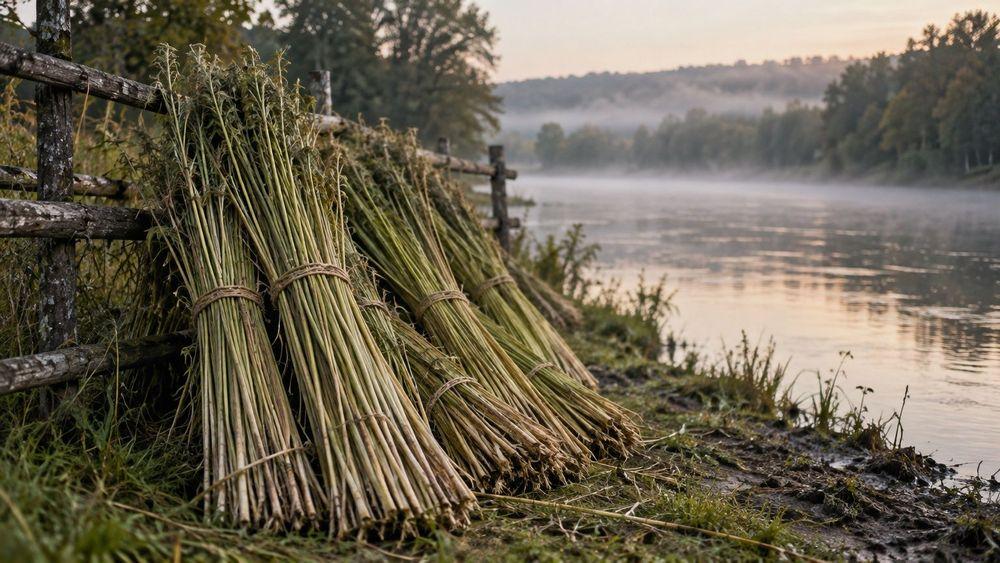
The 1765 diary line everyone quotes
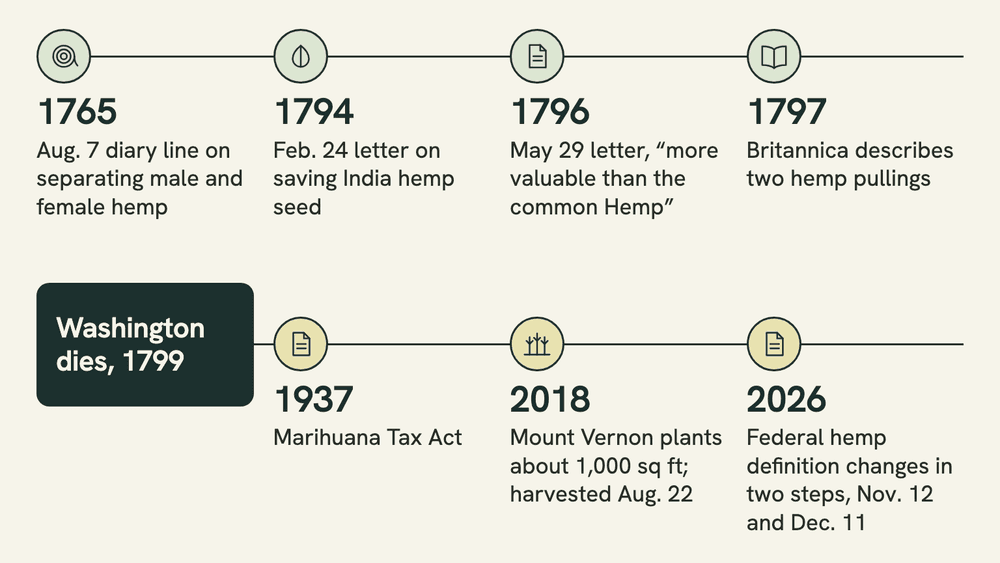
On August 7, 1765, George Washington made the entry the whole story leans on. In Fitzpatrick's 1925 printing of the diaries, volume 1, page 213, he "began to seperate the Male from the Female hemp at Do" and added "rather too late". "Do" means ditto, the place named before it, and the sources we read disagree on which farm that was, so we will not guess. The entries quoted below run from page 211 to page 215 of the same volume.
Here is the myth's reading. Today's flower growers remove male plants so female flowers stay unpollinated and seedless, as our guide to telling male and female cannabis plants apart explains. Read that way, Washington was a sinsemilla (seedless flower) grower, and "rather too late" means the pollen had already flown. Taken alone, those few words allow that. They allow other readings too, because the line does not say why he did it. So read the entries around it, with each quotation stopped where the printed line breaks at a dash:
- May 13: "Sowed Hemp at Muddy hole by Swamp".
- August 9: "Abt. 6 oclock put some Hemp in the Rivr. to Rot". Rotting, or retting, is soaking stalks so the fiber comes away from the woody core.
- August 10: "Seperated my Ewes and Rams", then "but I believe it was full late", because "many of the Ewes having taken Ram."
- August 22: "put some Hemp into the Water", noting that "this Hemp had been pulld the 8th. Inst."
- September 4: "Began to pull the Seed Hemp", which was "not sufficiently ripe".
- October 12: finished at Doeg Run, "not much, if any, too late for ye Seed".
Stalks go into the river, and a separate crop he calls "Seed Hemp" stands into the fall so the seed can ripen. That looks like someone after fiber and seed. It does not rule out every other use, but none of the hemp entries we read mentions resin or smoking. The limit is real: these entries say "some Hemp", so they cannot prove the plants of August 7 are the ones he soaked later.
The sheep entry helps. Three days after the hemp line, he uses the same verb and the same complaint about his flock, and there he gives the reason: the ewes had already been bred. With the hemp he gives none, so the diary does not show what "too late" cost him.
What a 1797 encyclopedia says about pulling hemp
Why would a hemp farmer sort a field by sex at all? The third edition of Encyclopaedia Britannica (1797), in a modern transcription, describes two separate pullings, each with its own name, as plain farm routine.
| Pulling | Timing in Britannica | Britannica's name | Plants taken | Washington, 1765 |
|---|---|---|---|---|
| First | "about the middle of August" | "fimbled hemp" | "the male plants" | August 7: separating begins. August 8: hemp pulled, per his August 22 note |
| Second | "a little after Michaelmas, when the seeds are ripe" (Michaelmas is September 29) | "karle hemp" | "the female plants which were left" | September 4 to October 12: "Seed Hemp" pulled |
The entry's warning runs opposite to the myth. If "the male plants are drawn out too soon from the female", it says, "the seeds will prove only empty husks", and it suggests farmers "defer this for a fortnight or three weeks longer, until those male plants have fully shed their farina or dust". Farina here means pollen. That farmer wants his female plants pollinated, because he wants seed. A sinsemilla grower wants the reverse.
In that account, separating the sexes is ordinary hemp husbandry with a name for each cut, and seedless flower does not come into it. John L. Smith Jr. reads the diary the same way in the Journal of the American Revolution: males were separated "for the controlled breeding of seeds needed for the next year's crop". The limit is that Britannica was printed 32 years later, its examples are English, and it shows what was normal, not what Washington was thinking. The next summer he complained again, "too late for the blossom Hemp by three Weeks or a Month" (volume 1, page 228), and nothing we read defines that term.
The 1794 "India hemp" letter and the misquote
The second document is a letter George Washington wrote from Philadelphia on February 24, 1794, to William Pearce, his farm manager, about seed saved in the Mount Vernon garden. It is printed in Fitzpatrick's Writings, volume 33, page 279:
“I am very glad to hear that the Gardener has saved so much of the St. foin seed, and that of the India Hemp. Make the most you can of both, by sowing them again in drills.”
St. foin is sainfoin, a forage crop. He spends several lines on where to put it, "as Hares are very destructive to it", and only then returns to the other seed in one short line: "The Hemp may be sown any where." In context that is a shrug, not a slogan. The St. foin needs a protected spot and the hemp does not.
Now the version you will see online: "Make the most of the Indian hemp seed, and sow it everywhere." That sentence is not in the letter. To us it reads like a splice of "Make the most you can of both" and "The Hemp may be sown any where", with the St. foin dropped and "India" changed to "Indian". CelebStoner prints a shorter variant and ties it to a letter of August 17, 1794, but the passage of that letter we read says only "make the most of it". We checked these letters, not every page he wrote.
| Document | What circulates | What is printed | In plain English |
|---|---|---|---|
| Diary, August 7, 1765 | He "could only have been seeking a crop with stronger 'medicinal' qualities" (a 2009 opinion column, linked below) | "began to seperate the Male from the Female hemp at Do", then "rather too late" | He was behind on a field job. He does not say why he did it. |
| Letter to Pearce, February 24, 1794 | "Make the most of the Indian hemp seed, and sow it everywhere" | "Make the most you can of both, by sowing them again in drills." Later: "The Hemp may be sown any where." | Multiply two lots of seed. The hemp, unlike the St. foin, does not need a spot safe from hares. |
The harder letter: "more valuable than the common Hemp"
If you want the strongest evidence for the myth, it is not the 1794 letter. It is a trail of notes about this seed. In January 1794, George Washington wrote home that he had given the gardener "a few Seed of East India hemp to raise from". By August 1794 he wanted the seed saved "that, if it be valuable I may make the most of it", so he did not yet know what it was worth. In March 1795 he asked that it be sown again "for the purpose of getting into a full stock of seed." Then comes a letter of May 29, 1796, printed in volume 35:
“What was done with the Seed saved from the India Hemp last summer? It ought, all of it, to have been sown again; that not only a stock of seed sufficient for my own purposes might have been raised, but to have dissiminated the seed to others; as it is more valuable than the common Hemp.”
Washington does not say why it was valuable, or what his "own purposes" were. Anyone who tells you the answer, in either direction, is filling a gap the letter leaves open. Fair context, labeled as context: he wanted the seed "dissiminated" to others, and in December 1796 he told Sir John Sinclair that "The Hemp of the East Indies grows well here (from my own experience)", beside the Hemp of New Zealand and the tea plant, in a passage on crops that might thrive in America. None of this proves he wanted it for fiber.
So what was India hemp? Washington never describes the plant, and nothing we could read in the printed letters settles it. The word hemp has covered several plants. Singapore's NParks flora database lists Crotalaria juncea as Bengal hemp and Bombay hemp, and the North American plant dogbane, Apocynum cannabinum, is also called Indian hemp. Regional types of cannabis are real too, as our page on landrace strains explains, but a label in a letter does not tell you which type this was or what it contained. The candidates:
- A Cannabis type from Asia. This is the most natural reading, because he sets it against "the common Hemp". Nothing shows its chemistry.
- A different fiber plant sold as hemp, such as Crotalaria juncea, which is native to India and its neighbors.
- Dogbane. This is more a naming trap than a candidate: it is native to North America, while his own words, "East India" and "East Indies", point overseas.
Did George Washington smoke it?
We found no document showing he did. We searched for hemp in five printed volumes of his diaries and writings, not the full run, so that is a statement about what we read. Smith, who quotes many of these letters, goes further: "There's absolutely zero evidence that he grew it or used it for recreational purposes."
The "probably" you may have seen is the claim of a 2009 opinion column reprinted on History News Network, headlined with the line that he "raised hemp and probably smoked it". It calls it "highly likely at least some of them smoked", and says "Washington could only have been seeking a crop with stronger 'medicinal' qualities." Its support is the same August 1765 diary line plus reasoning from the founders' tobacco and beer habits. It shows no document in which anyone smokes hemp, and "could only have been" claims more than that diary line says.
It would be just as easy to overcorrect. AP's 2018 report said "the idea of smoking marijuana to get high would have been foreign to people in Washington's time." As an absolute, that goes too far. The same 1797 Britannica says that from pounded, boiled leaves "the natives of the East Indies prepare an intoxicating liquor of which they are very fond." That is a drink, far from Virginia, and it says nothing about Washington. It only means the honest answer rests on missing evidence.
As for the image many people picture first, Ripley's says the legend took off in the 1990s with one-dollar bills stamped with a bubble by Washington's mouth reading "I grew hemp." A stamp on a dollar bill is folklore, not a source.
George Washington's hemp vs today's weed
The record points to George Washington's crop being fiber hemp. The Zebra's 2018 report calls it "strictly the industrial cultivar", but that is a reading of the papers, not a lab result. Nobody measured THC in his crop, so any low figure you see for it is a modern number applied backward. What we can compare is what each crop is for: the fiber comes from the stalk, while cannabinoids concentrate in the resin of the flowers, as our walkthrough of cannabis plant anatomy shows. Even the word does not fit him: the oldest known printed use, as our history of the word marijuana explains, is from 1846, decades after he died in 1799.
| Question | Washington's hemp | Today's weed |
|---|---|---|
| What it was for | Rope, thread, canvas, nets, seed and possible sale | Flower, for its cannabinoids |
| Part used | Stalks for fiber, plus seed | Female flowers |
| How the crop was managed | Sown, pulled in two stages, rotted in water, seed saved as "Seed Hemp" | Commercial crops are all female and kept seedless; male plants are destroyed |
| THC data | None. Nobody measured it, so potency is unknown | Measured by laboratory testing |
| Law | Encouraged: he wrote of Parliament's bounty, and a bounty payment is reported for 1767 | A controlled substance under federal law, with separate state rules |
That last row is where "he grew it, so it was legal weed" goes wrong. Federal marijuana law came long after him, with the 1937 Marihuana Tax Act, and our timeline of how weed became illegal picks up the story from 1850. As of November 6, 2026, federal law separates hemp from marijuana by THC content, with hemp capped at 0.3% delta-9 THC by dry weight. That definition changes in two steps, as a September 2026 Congressional Research Service brief lays out: on November 12 for certain synthetic cannabinoid products, and on December 11 for the rest, including a total-THC limit. Our report on the split deadline has the detail, and our guide to CBD's legal status covers the wider picture.
Did other founders grow hemp?
Hemp was no Mount Vernon quirk. In 1776, Thomas Paine's Common Sense counted it among America's defenses: "Hemp flourishes even to rankness, so that we need not want cordage", meaning rope and rigging. PolitiFact reported in 2019 that "Jefferson grew hemp both at Monticello and his other plantation, Poplar Forest", and that "there is no record of Jefferson ever smoking the plant." We rely on PolitiFact there, and we have not surveyed every founder.
Mount Vernon grows hemp again
In 2018 the estate put hemp back in the ground. AP reported about 1,000 square feet of industrial hemp planted in May, and interpreters harvested it on August 22. AP called it "the first hemp crop in centuries on the estate grounds", while NPR's report the next day was more careful: "what historians say could be centuries". That crop was grown under a modern legal program, so it can show you the fiber process, but it tells you nothing about the chemistry of the plants Washington grew.
What we could not check
Every Washington quotation here comes from Fitzpatrick's printed editions, scanned on archive.org: page images for the 1765 line and the February 1794 letter, scanned text for the rest. Founders Online and the 1976 Jackson and Twohig edition of the diaries would not open for us, so we have not compared their wording or read their editors' notes. Small differences are likely: where Fitzpatrick prints "sown again" in March 1795, the Journal of the American Revolution prints "sown agin". If you plan to quote any of this, check a manuscript-based edition first.
Mount Vernon's website would not open for us either. Its words here come from a 2022 reproduction of its hemp page, and its position on the marijuana claim from search-result summaries, so the current pages may read differently. Our "no document" rests on five volumes, which is enough to read these letters and not enough to prove a negative. What India hemp was, and why it was worth more to him, stay open.
George Washington and hemp: FAQ
He grew hemp, and his diaries and letters document it in detail. The record points to fiber, seed and possible sale. In the five printed volumes we searched, we found no document showing he grew it to get high. Nobody measured the THC in his crop, so its potency is unknown. The accurate summary is hemp yes, marijuana not shown.
We found no document showing he did, in the five printed volumes we searched. John L. Smith Jr., writing in the Journal of the American Revolution, says there is "absolutely zero evidence". The claim that he "probably" smoked comes from a 2009 opinion column, which cites no document in which he smokes hemp.
He never describes it, and nothing we could read settles the question. He called it "East India hemp" and "the Hemp of the East Indies", which points overseas. The most natural reading is a Cannabis type from Asia, though another fiber plant sold as hemp cannot be excluded. Dogbane, the North American plant called Indian hemp, is a poor fit.
Not in the February 24, 1794 letter it is usually tied to. That letter says "Make the most you can of both, by sowing them again in drills", about St. foin and hemp seed, and later, "The Hemp may be sown any where". We checked the letters discussed on this page, not every page he wrote, and the popular sentence is not in them.
PolitiFact reported in 2019 that Jefferson grew hemp at Monticello and Poplar Forest, and that there is no record of him smoking it. Thomas Paine praised American hemp in Common Sense in 1776. We have not surveyed every founder.
George Washington's story is a useful way into a bigger question: how the same species can be a rope crop in one setting and a controlled drug in another. For the plain-English version of that line, read our side-by-side guide to hemp and marijuana next.
Writing about hemp, wellness and the small rituals that keep us balanced.