What Is Zaza Weed? What the Slang Means, and the Zaza That Isn't Cannabis
Zaza, or za, is slang for weed someone considers premium. No lab, label or law defines it, so here is what the word implies and what you can actually check. Plus a warning: Zaza is also a brand name on tianeptine products FDA warns about, and those are not cannabis.
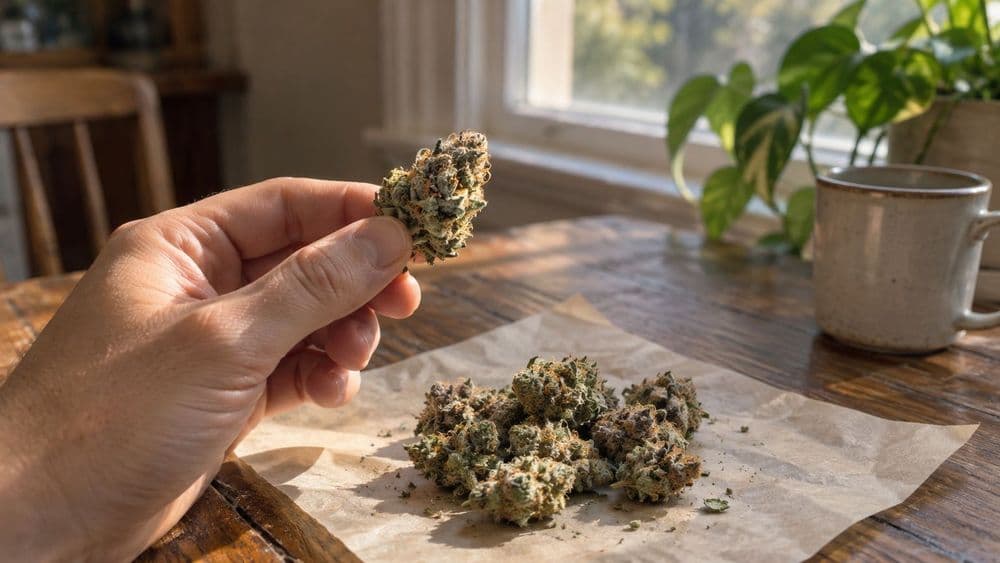
Zaza weed, often shortened to za, is slang for flower the speaker thinks is premium, the "exotic" stuff. It is a compliment, not a measurement: no lab report, label or state rule defines it. There is one more thing worth knowing before you go looking for it. Zaza is also a product name on tianeptine, an unapproved drug that FDA warns is sold at gas stations, convenience stores and vape shops. That Zaza is not cannabis.
So what does zaza mean in practice? When someone says they have zaza, they are telling you they rate it highly: strong, loud-smelling, good-looking flower, maybe with a hyped name. They are not telling you anything you can verify, because potency is measured, not named. The useful move is to translate the word into things you can check: the THC and terpene numbers on a lab report, the harvest or test date, and how the flower actually looks and smells. This guide does that translation, explains where the word came from, and covers the gas-station products that share the name.
What does zaza mean?
Zaza, or just za, is cannabis slang for weed the speaker considers premium. Weedmaps' explainer on zaza calls it "cannabis slang for premium, exotic weed", and Know Your Meme's guide to the term describes it as "an abbreviation for 'exotic' marijuana or weed strains." That second definition is the key: zaza started as a way of saying exotic, which in cannabis talk means rare, new or hard-to-get flower.
In use, zaza is a status word, closer to "top shelf" than to any technical term. It says the speaker paid for, or wants credit for, the good stuff. Like most status slang, it has drifted. By 2021 it was a meme, and many people now use it for almost any weed, the same way "fire" can describe an average lunch. That drift is the first reason the word cannot tell you much about what is in a bag. (Outside cannabis, Zaza is also the name of a people of eastern Turkey and their language, Zazaki. That sense has nothing to do with this one.)
Where the word zaza came from
Know Your Meme traces the earliest online use it could find to a June 22, 2019 tweet by the Atlanta rapper Ola Runt, who then used the word in his "1500 Block" video in February 2020. From there it moved through the Atlanta scene, including Lil Keed, then through 2020 memes and verses by artists such as Money Man, 21 Savage and Trippie Redd. By 2021, "smell that zaza" had become a catchphrase of its own.
Who actually coined it is less settled. Weedmaps says Ola Runt "helped popularize the term in 2019 and later claimed that he coined it", and adds that "the available evidence doesn't establish one undisputed creator of the slang." That is the honest version: he has said he coined it, nobody has documented that, and nobody has documented anyone earlier either. Cannabis words usually travel this way, through music, regional scenes and jokes long before anyone writes them down. Zaza sits in the same family as the number codes in our guide to what 710 means, and the pattern is older than any of them, as the story of why cannabis came to be called marijuana in the US shows.
Is zaza a strain?
Mostly no. As slang, zaza is a grade someone gives a bag, not a variety. But the word is also a name, and names get used. A few menus and seed sellers sell something called Zaza as a cultivar, and Weedmaps attributes one to a breeder called South Bay Genetics. A name on a jar is not a genetic test, though. A 2021 Nature Plants study profiled 297 Dutch cannabis samples, genotyped 137 of them, and found that the Sativa and Indica labels were genetically indistinct, and that samples sharing a name were often as different as samples with different names. (Two of its authors were employed by Bedrocan, a Dutch cannabis producer that funded the work.)
An earlier genotyping study of 81 marijuana and 43 hemp samples put it bluntly: "marijuana strain names often do not reflect a meaningful genetic identity." So if a jar says Zaza, you know what the seller decided to call it. You do not know what is inside. Our guide to landrace strains and what a strain name can and cannot tell you goes deeper on why names drift.
What zaza weed promises vs what you can actually check
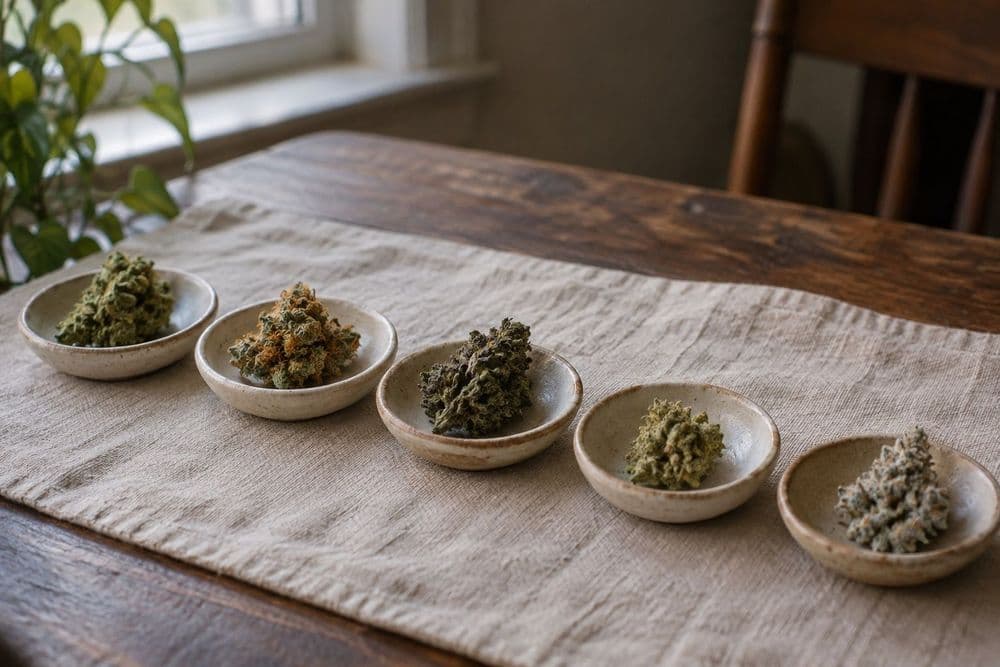
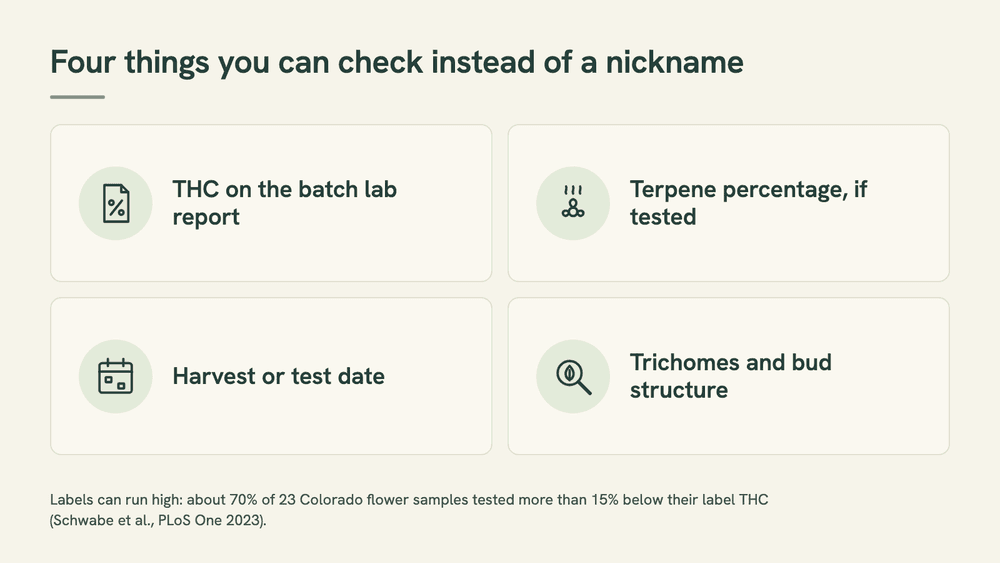
Calling weed zaza implies three things: it is strong, it smells great, and it is the good stuff. Research on how cannabis is labeled and judged suggests none of those can be read off a word, and some cannot be read reliably off the label either. When researchers bought 23 flower samples from 10 Colorado dispensaries and tested them, about 70% came in more than 15% below the THC on the package, and measured THC averaged 14.98%. The authors point to "financial incentives to market high THC potency." The lab matters too: in Washington State's traceability data, covering 215,285 test results, the same kind of flower reported a median of 17.6% or 23.1% THC depending on which lab tested it, according to a 2018 Scientific Reports analysis (figures from its published correction).
Then there is the nose. In a 2018 Colorado study, 61 adults rated how potent 11 cannabis samples seemed by smell, and their ratings did not match measured THC. As the authors note, "THC is nonvolatile and odorless." One sample sold as Super Skunk tested at 10.4% THC. So "smell that zaza" describes a real experience, but it is a statement about terpenes and other aroma compounds, not about strength. All three studies are small or local (one state each, and the smell study's materials were funded by the first author's company), but they point the same way: the word on the bag and even the number on the bag deserve a second look. The table below converts each zaza promise into something you can actually check.
| The claim | What it implies | What you can actually check | Where we go deeper |
|---|---|---|---|
| "It's strong" | High THC | Total THC on the label and, better, on the batch COA. Labels can run high and labs vary, so read it as a range. | Does THC percentage matter; How to read a COA |
| "Smell that" | Loud, pungent aroma | Your own nose, plus a terpene percentage if the lab tested terpenes. Aroma does not predict THC. | Terpene percentage; Why weed smells like skunk |
| "It's fresh" | Recent harvest, good storage | Harvest, package or test date on the label; sealed, cool, dark storage. | Does weed go bad |
| "Look at it" | Frosty, well-trimmed buds | Trichome coverage and color, intact buds rather than shake, no mold or webbing. | What are trichomes; What good weed looks like |
| "It's exotic" | Rare or hyped genetics | Nothing on a label can confirm it. A name is not a genotype. | Landrace strains |
| "It's legit" | A clean, tested product | A licensed seller, a batch COA and a contaminant panel (pesticides, microbes, heavy metals). | How to read a COA |
Each check on the right has its own guide. Start with whether THC percentage matters for what the potency number can and cannot tell you, then how to read a certificate of analysis so you can find that number on the actual lab report. Terpene percentage explains the aroma number, how trichomes work explains the frost, and whether weed goes bad covers dates, moisture and storage.
Zaza, gas, loud, exotic, top shelf and mids: the neighbors
Zaza belongs to a crowd of quality words. None of them is a standard, but they point at different things, which helps when you are trying to work out what someone means.
- Zaza or za: premium, often hyped or "exotic" flower. It measures nothing; it is a rating.
- Exotic: rare, new or heavily marketed genetics. A name or a story, not a lab result.
- Gas: a fuel-like, pungent aroma. A real smell family, but a smell, not a potency figure.
- Loud: a strong smell, sometimes stretched to mean strong effects. Aroma is still not THC.
- Fire: general praise. It means the speaker liked it.
- Top shelf: the priciest, best-looking product on a menu, usually whole, well-trimmed buds.
- Mids: middle-grade weed. The opposite of zaza in slang, not in any test.
- Shake: the loose bits at the bottom of a bag or jar. It describes a form, not a grade.
Gas is the most interesting of these, because breeders take it seriously. A 2025 Oregon State study of 91 samples noted that THC-type breeding "has more recently emphasized musty, skunky, and gassy profiles", yet the chemistry it measured did not strongly predict how people described the aroma. Our explainer on why weed smells like skunk covers the compounds behind the gas note, and our guide to shake weed and how it compares with top shelf covers the grades people use at the other end of the scale.
Zaza Red is not weed: the tianeptine products FDA warns about
Here is the part that has nothing to do with cannabis. On May 8, 2025, FDA's commissioner sent a letter to health care professionals about tianeptine products, describing "a dangerous and growing health trend facing our nation and particularly young people." The letter lists brand names tianeptine is sold under, and one of them is the word this page is about.
“Tianeptine is frequently available at convenience stores, gas stations, vape shops, and online retailers. Product names include, for example, Tianaa, Zaza, Neptune's Fix, Pegasus, and TD Red. Tianeptine has also been referred to as 'gas station heroin.'”
If you searched for "Zaza Red", you were most likely looking for one of these products. FDA's list names Zaza and, separately, a product called TD Red. CDC's report on a 2023 New Jersey outbreak names it too, describing tianeptine as "an unregulated drug sold under several product names (e.g., Neptune's Fix, Pegasus, and Zaza)." Tianeptine is sold as an antidepressant in some other countries. FDA describes it as "a full mu- and weak delta-opioid receptor agonist", which means it acts on the same opioid receptors as morphine. That is why people take it for a high, and why people who stop suddenly can go through withdrawal that FDA says resembles opioid withdrawal.
FDA's list of reported harms runs from nausea, sweating and a racing heart to agitation, confusion, slowed breathing, coma and death. FDA's drug alert on tianeptine says it has received reports of seizures, loss of consciousness and death after one product, Neptune's Fix, warns that these products "may also interact, in life-threatening ways, with other medications", and records that on January 11, 2024 the agency urged gas stations and convenience stores to stop selling tianeptine products. None of these products is flower. FDA says tianeptine has been sold online in pill, liquid and powder forms, and the recalled Neptune's Fix line included an elixir and tablets.
The legal status is moving, so here it is with dates. FDA's May 2025 letter says: "In the U.S., tianeptine is not currently scheduled under the Controlled Substances Act. In addition, tianeptine is not approved by the FDA for any medical use, is not generally recognized as safe for use in food, and does not meet the statutory definition of a dietary ingredient." That may change. After HHS recommended Schedule I on July 18, 2025, DEA proposed placing tianeptine in Schedule I on July 8, 2026 (91 FR 42150), the same category as heroin. Comments closed on August 7, 2026, and as of October 31, 2026 no final rule had been published, so federally it is still unscheduled. States have moved faster: HHS counted at least 15 that had banned or controlled it by the time of its review, and Florida, for example, has listed it as a Schedule I drug in state law since July 1, 2024. HHS also noted that state bans "have not limited the sale and availability of tianeptine online." This is a dated summary, not legal advice.
Those tiles come from three sources. Poison centers logged 4 tianeptine cases in 2013 and about 350 in 2024, according to an FDA consumer update on tianeptine harms. A 2025 analysis of 892 single-substance exposures reported to US poison centers from 2015 to 2023 found the exposure rate rose about 1,400%; 40.1% of people required medical admission, and 22.9% of all cases went to a critical care unit. Poison-center calls are not a count of users, and not every call is a poisoning, but the direction is hard to miss.
The cannabis connection goes beyond the name. In New Jersey between June and November 2023, the state poison center logged 17 people aged 28 to 69 who became severely ill after taking tianeptine, 14 of them a gas-station elixir called Neptune's Fix. All had altered mental status and 8 had seizures. Thirteen went to intensive care and seven needed a breathing tube. Nobody in that cluster died. Investigators tested six product bottles from two patients, and two of the bottles held synthetic cannabinoids (MDMB-4en-PINACA and ADB-4en-PINACA) that were not on the label, along with THC and CBD. The synthetic cannabinoids made up the largest share of the cannabinoids found, and the CDC authors wrote that the severity "might reflect SCRA toxicity, the effects of polysubstance ingestion, or both." SCRA means synthetic cannabinoid receptor agonist, the drug class behind K2 and Spice, which our comparison of K2 vs weed explains. Six of the 17 had also taken other drugs. A fuller follow-up by the same team counted 34 patients and no deaths, at a rate of 4.6 cases a month against a usual half a case a year.
| Question | Zaza, the cannabis slang | Zaza, the tianeptine product name |
|---|---|---|
| What it is | Cannabis flower someone rates highly | Tianeptine, an antidepressant in some countries that acts on opioid receptors |
| What it looks like | Buds or pre-rolls | Capsules or tablets, liquid shots, powder |
| Where it is sold | Licensed dispensaries in states that allow it, or informal sellers | Gas stations, convenience stores, vape shops and online, per FDA |
| Lab testing | Licensed cannabis is tested under state rules | Not approved for any medical use and not a dietary ingredient, per FDA |
| Federal status | Marijuana remains federally controlled; state rules differ widely | Not scheduled as of October 31, 2026; DEA proposed Schedule I on July 8, 2026; at least 15 states ban or control it |
| Hidden extras found | Not applicable | In 2023 New Jersey samples: two synthetic cannabinoids not listed on the label |
Tianeptine is not the only opioid-receptor product on gas-station shelves. Our guides to kratom and weed and to DEA's 2026 action on 7-OH cover two more that regulators are watching.
How to tell them apart, and what to do if someone took one
The simplest rule: if it is not flower, a pre-roll or a product from a licensed cannabis store, the word zaza on the package is not telling you it is weed. These are the red flags that you are holding something else.
- It is a capsule, tablet, small liquid "shot" or powder sold at a gas station, convenience store, vape shop or smoke shop.
- The words tianeptine, tianeptine sodium or tianeptine sulfate appear anywhere on the pack, including the fine print.
- It is marketed as a "nootropic", a "research chemical" or a dietary supplement, the three framings FDA says tianeptine is sold under.
- It says "not for human consumption" while clearly being sold for people to take.
- It promises better mood, focus or energy, or relief from withdrawal.
- There is no batch number, no manufacturer address and no lab report you can look up.
The drug-screen point is about emergency care, not about passing a test. A standard workplace panel, like the 10-panel drug test, looks for a fixed list of drug classes, and FDA says tianeptine "may not be identified in routine drug screening panels." A clinician who is not told what was taken may not find it.

What this page cannot tell you
A few honest limits. The origin story rests on Know Your Meme's tracing and the rapper's own claim; we found no documented first use. Slang shifts by city and by year, so what zaza means to your friend may not match this page. The quality studies above are small or local (23 samples in Colorado, 61 adults in Colorado, one state's lab data, one country's genetics), and several had industry ties. On the tianeptine side, FDA gives its brand list "for example", not as a complete list, and no federal or peer-reviewed source we found names a product called Zaza Red or a company behind the Zaza brand. Poison-center data count reports, not how many people use these products. And the federal status could change at any time: if you are reading this well after October 31, 2026, check whether DEA has published a final rule.
Zaza questions, answered
Za is short for zaza, and both mean the same thing: weed the speaker rates as premium or "exotic". Know Your Meme describes the word as an abbreviation of "exotic". It is a compliment, not a grade or a test result, and in casual use it often just means weed.
Not by definition. The word has no threshold, so anything can be called zaza. Strength is a number on a lab report, and even that number needs care: in one Colorado study, about 70% of flower samples tested more than 15% below the THC on the package. Ask for the batch certificate of analysis instead of trusting the nickname.
No. FDA lists Zaza (and, separately, TD Red) among the product names tianeptine is sold under, and the capsules, tablets and liquid shots people search for as Zaza Red fit that description. Tianeptine is an unapproved drug that acts on opioid receptors. If someone is unwell after taking one, call Poison Help at 1-800-222-1222, or 911 if they are unconscious or struggling to breathe.
Zaza is a word, so the rules depend on what the product actually is. Cannabis follows your state's law, which varies widely, and marijuana remains federally controlled. Tianeptine was not federally scheduled as of October 31, 2026, but DEA proposed placing it in Schedule I on July 8, 2026, and at least 15 states ban or control it, including Florida, where it has been Schedule I since July 1, 2024. This is general information, not legal advice.
FDA says tianeptine "may not be identified in routine drug screening panels", and DEA's 2026 proposal, citing CDC, adds that specialized testing may be required. The reason this matters is safety: in an emergency room a standard screen may not reveal it, so tell the clinician the product name. The 2023 New Jersey bottles also held THC and synthetic cannabinoids that were not on the label, so anyone taking these products cannot know what is in them, or what any test would show.
Slang turns over as words go mainstream, and quality words do a social job: they signal that the speaker knows good weed. Zaza joined a long line of praise words, and gas, loud and fire sit alongside it today. None of them is a standard, which is why the measurable checks matter more than the name.
Zaza is a compliment, and that is all it is. What you can trust is what you can check, and our checklist on what good weed actually looks like turns that into a few minutes of looking before you buy. If you are newer to the non-intoxicating side of the plant, start with what CBD is and what it is not.
Writing about hemp, wellness and the small rituals that keep us balanced.