What Is a Hash Hole? The Donut Joint, by the Milligram
A hash hole, or donut joint, is a joint with a rope of hash or rosin down the center. Here is the arithmetic sellers skip: how many milligrams of THC one holds, why the ash leaves a ring, what "solventless" really means, and what to check on the label.
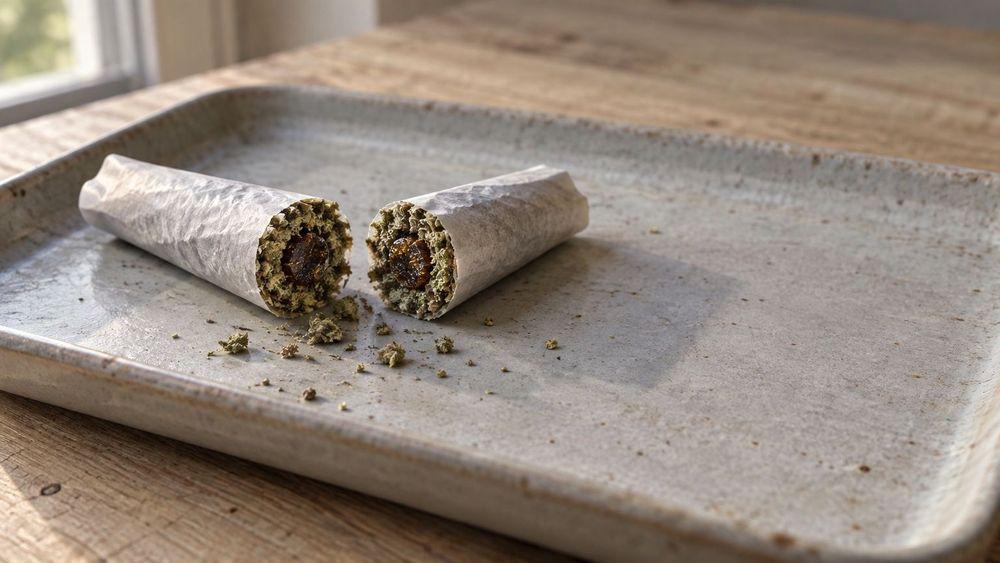
A hash hole, also called a donut joint, is a joint or pre-roll with a rope of hash or rosin running down its center. The name comes from what it looks like as it burns: the core goes ahead of the flower and leaves a hollow ring in the ash. By simple weight arithmetic on listed potencies, a seller-sized hash hole holds roughly 420 to 940 mg of THC in the stick. A mid-sized one comes to about three times a 1 gram pre-roll and around nine times an average joint.
Most guides on page one call hash holes "extra potent" and then spend their length teaching you to roll one. None of them prints a THC number for the finished product. We searched PubMed in November 2026 and found no study that has measured a hash hole: not its potency, its burn or what it delivers. So everything below is arithmetic from listed potencies plus what is known about joints in general, with every input named. This guide does not explain how to make one. It is for adults 21 and over in places where cannabis is legal, holding a hash hole or looking at one in a case, who want to know what is in it and how to judge it. Planntz does not make or sell hash holes, pre-rolls or any smokable product.
What a hash hole (donut joint) is
From the outside, a hash hole looks like a large, ordinary joint. Inside, a thin rope of concentrate runs the length of the stick, with ground flower packed around it on every side. Sellers describe the build in a narrow range. Weedmaps' guide to the format, updated in July 2026, gives 1 to 2 grams of flower around a half gram to a gram of rosin or hash, and retail units on page one are listed at 1.5 to 2 grams. Those are seller numbers, not a measured standard, and no regulator defines what a hash hole has to contain.
The core is what sets it apart from other infused pre-rolls. Most infused sticks either blend oil, hash or crystals in among the flower or coat the outside of the paper in oil and kief. A hash hole puts the concentrate in one place, the middle, and keeps the flower around it plain. Our guide to what goes into infused pre-rolls and how to read their labels covers the whole category; this page covers the cored version.
The name, unlike most cannabis slang, has a traceable source. In a 2022 LA Weekly interview, California grower Shant Damirdjian said he started rolling rosin into the center of joints after a 2018 trip to the Spannabis fair in Barcelona, and named the result a hash hole because he did not want to call it a donut. He credited another grower, Lorenzo of Terps Army, who was doing the same thing and calling them "Terps Donuts", which is where the second name comes from. That is his own account, from someone who sells them. Mixing hash into joints is far older: the same article notes that Europeans have long sprinkled crumbly water hash into their joints.
“The word hash hole didn't even exist. I just didn't want to call it a donut because I wanted it to be different.”
So "hash hole", "donut joint" and "doughnut joint" are the same object. Other names turn up in store listings and forums, including wormhole and snake hole. They are informal, sellers use them loosely, and none of them tells you what or how much is inside. The label does, which is where the rest of this guide goes.
Why the ash leaves a hole
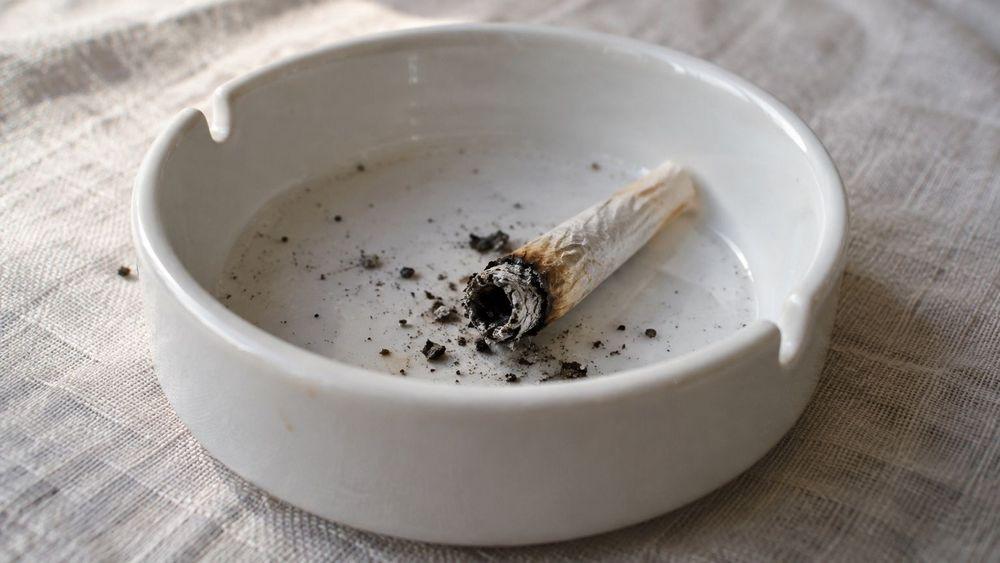
Resin softens at far lower heat than plant material burns. As the glowing tip of a hash hole approaches, the core warms, softens and partly boils off ahead of the coal, and some of it soaks into the flower around it. What is left behind is a ring of flower ash around a hollow center, the ring that gives the format its name. The best anchor for this is old research on ordinary joints. A 1978 study of how cannabinoids behave in a burning cigarette, published in the UN's Bulletin on Narcotics, found that the very steep temperature profile just ahead of the coal causes an "efficient flash evaporation of the cannabinoids", so much of the THC boils off there instead of burning. A core of resin sits in exactly that hot zone.
Be clear about what that is: the explanation that fits what is known about burning joints, not a measurement of hash holes. Nobody has studied one in a lab, and the guides on page one contradict each other. One says the core burns slower than the flower, another says the whole joint burns evenly, and a third says the core melts out. Sellers also say hash holes burn longer than ordinary joints. Nobody has timed it, and the honest reason a hash hole lasts longer is that it weighs five or six times as much as an average joint. A core that sits off-center, or a stick packed unevenly around it, can burn faster on one side. That is the same problem as any uneven joint, and our guide to why joints canoe and run down one side explains the mechanics.
How much THC is in a hash hole: the math
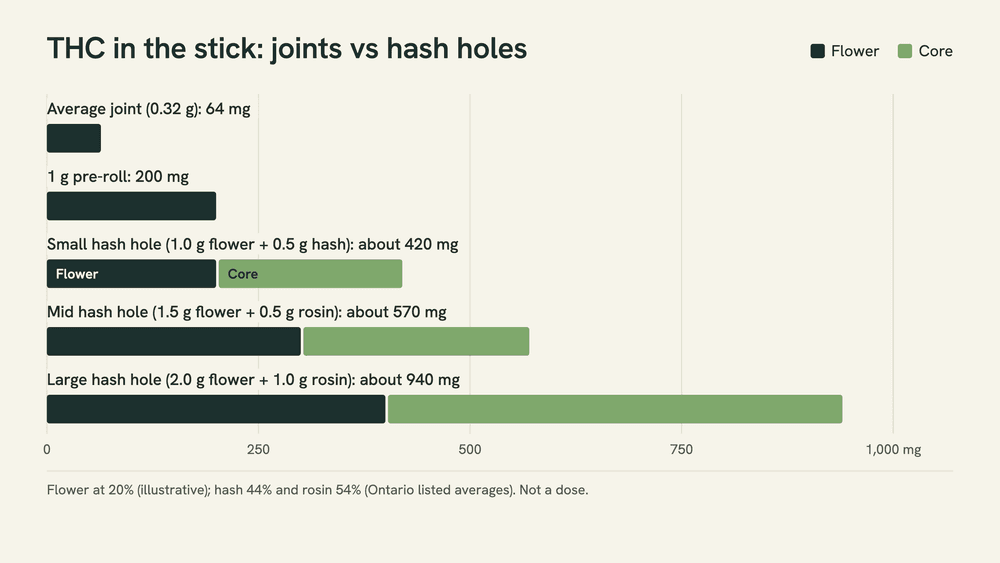
A hash hole is two materials in one stick, so the THC in it is (grams of flower x flower THC%) plus (grams of core x core THC%), times 1,000 to get milligrams. For the core we use listed averages from a 2026 study of every product on the Ontario government cannabis wholesaler's website: in early 2024, hash was listed at an average of 44% THC (range 23 to 68%, 44 products) and rosin at 54% (range 30 to 85%, 18 products), against 26% for dried flower. Those are label figures, not re-tests. For a US check, Washington's cannabis regulator puts wax, rosin, shatter and hash oil in a 60 to 90% band, kief and hash at 50 to 80%, and says the average flower sold there in 2022 tested at 21%. We use 20% for the flower as an illustrative round number. For an ordinary joint, the only data-based estimate is 0.32 g on average, inferred from prices in a RAND analysis of more than 10,000 purchase reports; no joint was weighed, and our guide to what an eighth weighs explains where that figure comes from.
| Item | Flower part | Core part | Total THC in the stick |
|---|---|---|---|
| Average joint | 0.32 g x 20% = 64 mg | none | about 64 mg |
| 1 g plain pre-roll | 1.0 g x 20% = 200 mg | none | 200 mg |
| Small hash hole (seller low end) | 1.0 g x 20% = 200 mg | 0.5 g hash x 44% = 220 mg | about 420 mg |
| Mid hash hole | 1.5 g x 20% = 300 mg | 0.5 g rosin x 54% = 270 mg | about 570 mg |
| Large hash hole (seller high end) | 2.0 g x 20% = 400 mg | 1.0 g rosin x 54% = 540 mg | about 940 mg |
| Same large build, rosin at 90% | 2.0 g x 20% = 400 mg | 1.0 g rosin x 90% = 900 mg | about 1,300 mg |
A few things fall out of that table. The core is a quarter of the weight but close to half the THC. In the mid build, the rosin is 0.5 of 2.0 grams (25%) and carries 270 of the 570 mg (47%). The ratios are arithmetic, not effects. By this arithmetic the mid build holds about 9 times the THC of an average joint and about 3 times a 1 g pre-roll. That does not mean it feels 9 times as strong; how much you actually take in depends on how much is smoked and how. The weak spot in the number is the flower. In a blinded purchase audit at 52 Colorado dispensaries, concentrates landed within 15% of their label 96% of the time (95 of 99) and flower only 57% of the time (101 of 178). And in a 2026 Colorado re-test of 265 flower products, ordinary pre-rolls were the flower format most likely to carry a THC number higher than the lab found (59.3% over-labeled); that study did not test hash holes. Our reading, not a finding from either study: in a hash hole the flower is most of the weight, and it is the less reliable half of the number. If the mid build's flower tested 17% instead of 20%, it would hold about 45 mg less.
Read every figure above as THC in the stick, not THC in you. In a machine-smoking study of 12 cannabis samples, joints delivered on average about 13% of their THC in the smoke (range 7.2 to 28.0%), and that was a machine, not a person. In people, a review of how the body handles cannabinoids put the share of smoked THC that reaches the bloodstream at roughly 8 to 24%, depending largely on the smoker. So the stick total is for comparing products, not for predicting how you will feel. Two more notes. If a label says "Total THC", the acid form, THCA, has already been converted, so do not apply the 0.877 conversion again. And if you want the plain-flower version of this math first, our guide to whether THC percentage matters starts from the same 1 g, 20% stick.
Hash, rosin or live rosin in the core: what the words mean
The core is usually one of two things. Hash is resin glands collected from the plant and pressed together. Rosin is resin pressed out of flower or hash with heat and pressure. A 2025 toxicology review draws the line that matters here: rosin "refers to a solventless extract obtained through mechanical compression (heat and pressure), whereas butane hash oil (BHO) is produced via hydrocarbon (butane) extraction techniques." Our guide to what hash is and how it differs from kief and rosin covers the names and their history in full, so here are only the words you will see on a hash hole's package.
- Hash: pressed resin glands, sometimes washed out of the plant with ice water ("bubble hash") or sifted dry. Listed lower than rosin on average in Ontario (44% vs 54%).
- Rosin: resin squeezed out of flower or hash with heat and pressure. Seller guides name it, along with hash, as the usual core.
- Live rosin: "live" is a trade term for a concentrate made from plants frozen at harvest instead of dried. It describes the starting material, not the strength or the safety.
- "Solventless": a seller's word for a concentrate made without a chemical solvent such as butane. It describes the process, not the potency or the purity.
"Solventless" deserves a closer look, because it is often sold as a quality grade. It is not one a regulator assigns. California's cannabis definitions define extraction as separating cannabinoids "through chemical or physical means", never use the word "solventless", and list water, the thing ice-water hash is washed in, as a nonvolatile solvent alongside ethanol and carbon dioxide. Butane and hexane sit in the separate volatile-solvent group. The safety framing came from marketing. When rosin took off, researchers who studied tweets about rosin from 2015 to 2017 found that 44% of the 2,010 they coded were media or promotional, and wrote that rosin "concentrates are advertised as a safer, more natural form of concentrates, but more research on this emerging form of marijuana concentrate is needed." A concentrate made without butane will not carry residual butane, and that is one line on a COA. Pesticide, microbial and heavy-metal results still apply to it. For how concentrates compare with flower more broadly, see dabs vs flower.
Hash hole vs other infused pre-rolls
Legally, a hash hole is not a separate product. Under California's labeling rules, a pre-roll with concentrate other than kief added is an infused pre-roll, and its package must show either the total cannabinoid content in milligrams, or the flower's percentage plus the added milligrams. A hash hole has rosin or hash added, so in California it falls under the same rule as any other infused stick. What differs is where the concentrate sits.
| Format | Where the concentrate sits | Usual material | Can you see it? | Burn notes (seller-reported) |
|---|---|---|---|---|
| Hash hole (donut joint) | A rope down the center, flower all around it | Rosin or hash | Only when it burns (the ash ring) or is cut open | Said to burn longer; the core can go ahead of the flower |
| Coated ("caviar" style) | On the outside of the paper | Oil plus a layer of kief | Yes, a sticky golden coat | Said to burn slower and less evenly |
| Blended inside | Mixed through the flower | Distillate, hash or THCA crystals | Usually not | No consistent claim |
The blended style most often uses distillate, the refined THC oil explained in our guide to THC distillate. Scale the cored idea up to cigar size and you get something close to a cannagar, which has its own guide: what a cannagar is and how it differs from a blunt. For the format questions every joint raises, from wraps to smoke, see how blunts and joints compare. What all three infused styles share is that the number on the front of the package is no longer a single material's percentage. You need milligrams.
How to judge a pre-made hash hole before you use one
Whether you are reading a package at a dispensary or looking at one someone hands you, five checks tell you most of what you need. Our guide to reading a certificate of analysis line by line shows where each result sits on a real lab report.
- 1Total THC in milligrams per unit. If the package gives the flower's percentage plus the added milligrams instead, add them up: flower grams x percentage x 1,000, plus the added mg. A percentage alone is not enough for this format.
- 2The core named, with its own potency if listed. Hash, rosin and live rosin are different materials, and "infused" alone tells you little.
- 3Unit weight. A 2 g hash hole and a 1 g infused pre-roll are not comparable without it, and weight is most of the THC story.
- 4A batch or lot number that matches a COA, with the testing lab named, a test date, and pass results for pesticides and microbial contaminants. If the COA covers only the flower and not the finished product, the total on the front is not verified.
- 5The packaging date. Infused products sit in cases for a while, and a date tells you how long.
One label detail trips people up. California's lab definition of Total THC already folds the acid form in with a 0.877 factor, the share of mass THCA keeps when heat turns it into THC. So a "Total THC" line is final; you only multiply by 0.877 yourself when a label shows raw THCA alone.
Smoke is still smoke, with more THC in it
A concentrate core changes how much THC is in the stick. It does not turn the rest of it into something other than smoke. When Health Canada machine-smoked cannabis and tobacco the same way, cannabis smoke carried up to 20 times the ammonia and 3 to 5 times the hydrogen cyanide and nitrogen oxides; those were flower joints, not hash holes. Our blunt vs joint comparison covers the combustion evidence in more depth. No study has looked at whether a rosin core changes what is in the smoke, and nothing about the word "solventless" answers that question.
The bigger practical issue is THC. In a 2020 study of 121 regular users in Colorado, people using concentrates had about twice the blood THC of flower users (0.32 versus 0.14 micrograms per milliliter of plasma) while reporting a similar high. Over the longer run, a 2025 review of 42 studies called the link between higher-potency cannabis and problem use "suggestive" and rated its certainty "very low"; it cannot show that potency causes harm. Hash holes are built to be shared, and the habits below are about not letting a high-content stick get ahead of you. They are not a dosing plan. Timing is the first one: in a 2018 Johns Hopkins trial of 17 infrequent users, most drug effects after smoking or vaping peaked within the first hour, so what you feel a few minutes in may not be the full effect.
- Wait before deciding on more. Effects can keep building for up to an hour.
- Pass it, and feel free to put it out. A hash hole does not have to be finished in one session.
- Skip alcohol and other substances in the same session.
- Never drive or operate machinery afterward, and store cannabis away from children and pets.
- If you are new to cannabis, a hash hole is the high-content end of the shelf, not a starting point.
With a high-content stick, overdoing it is easier than with a plain joint. If a session goes further than you meant it to, our guide to what greening out looks like and what to do covers the signs, what helps and when to get medical help.
Hash holes, the law and the hemp version
A hash hole is cannabis flower plus a cannabis concentrate, so it falls under the same state cannabis rules as both, for adults 21 and over in states that allow adult use. One wrinkle: states often set a separate, lower possession limit for concentrates. California's adult-use statute, for example, allows adults 21 and over "not more than 28.5 grams of cannabis not in the form of concentrated cannabis" and, separately, "not more than eight grams of cannabis in the form of concentrated cannabis, including as contained in cannabis products." How a hash hole's core counts toward that second limit is not spelled out, and we will not guess. Other states use different limits, so check your own state's rules. This is not legal advice.
Some hash holes are sold as hemp, typically hemp flower around a THCA rosin core. "Hemp" on that label is a legal category, not a potency ceiling. Run the arithmetic and a THCA-cored stick holds hundreds of milligrams of total THC once heat converts the THCA, whatever its flower tests at; for scale, 1 g of flower at exactly 0.3% total THC holds 3 mg. The 2025 federal hemp rewrite, P.L. 119-37, section 781, measures hemp by total THC, THCA included, at no more than 0.3% on a dry-weight basis, covers products meant for "inhalation", and excludes from "hemp" any final product with more than 0.4 mg of total THC per container. Under the timing set by a later law, that total-THC test and the 0.4 mg container limit will apply from December 11, 2026. As of November 29, 2026, when this guide was written, that date had not yet arrived. Our explainer on the 2026 hemp law and the story behind the December 11 date track what changes and when.
What nobody has measured
More than the store pages let on. When we searched PubMed in November 2026, "hash hole" returned two papers, both on unrelated topics (encryption and virtual reality), and "donut joint" returned only orthopedic and medical-device papers. No study has measured a hash hole's potency, its burn or what it delivers. The core potencies in this guide are Ontario listing averages and one US regulator's summary, not lab re-tests. The flower-label audits come from Colorado and cover ordinary flower and pre-rolls, not cored ones. The delivery figures come from a machine and a review of older human work, and they vary widely between people. The legal examples are one state's and one federal law's words. What holds up regardless is the habit: find the milligram line, do the weighted sum when the label makes you, and check that the COA matches the batch. The same label-first approach works on any shelf, from smokables to choosing a CBD oil.
Frequently asked questions
Because of the ash. As it burns, the concentrate core softens and goes ahead of the flower, leaving a ring of ash around a hollow center. The name itself traces to California grower Shant Damirdjian, who told LA Weekly in 2022 that he chose "hash hole" because he did not want to call it a donut. That is his account; nobody has studied the burn in a lab.
Yes, they are two names for the same thing: a joint with a rope of hash or rosin down the center. Damirdjian credited a European grower who called his version "Terps Donuts". Doughnut joint, wormhole and snake hole are other informal names you may see.
By arithmetic on listed potencies, seller-sized builds hold roughly 420 to 940 mg of THC in the stick, and a large build with very strong rosin could pass 1,000 mg. A mid-sized one is about 3 times a 1 g pre-roll and around 9 times an average joint by content. Content is not what you inhale: in a machine-smoking study, joints delivered about 13% of their THC on average.
A hash hole is one kind of infused pre-roll. Its concentrate sits in a single core down the center, while other infused sticks blend it through the flower or coat it on the outside. In California both fall under the same labeling rule: total milligrams, or flower percentage plus added milligrams.
There is no evidence for that. "Solventless" describes how the rosin was made, without a chemical solvent such as butane, and California's own rules count water as a solvent and never define the word. Rosin's "safer" image came largely from marketing, and researchers who studied that marketing said the research to back it up did not exist yet. Check the COA's pesticide and microbial results instead.
Sellers say longer than an ordinary joint, but nobody has timed it. The plain reason it goes further is size: retail hash holes are listed at 1.5 to 2 grams, against an estimated 0.32 g for an average joint.
Nobody can claim putting hash in a joint, which is a much older practice. The name "hash hole" traces to Shant Damirdjian's own account in a 2022 LA Weekly interview: he said he began rolling rosin into the center of joints after a 2018 trip to Barcelona, and credited another grower doing the same thing at the time.
It is the high-content end of the pre-roll shelf. Even a small build holds roughly twice the THC of a plain 1 g pre-roll by our arithmetic, so it is not a starting point for someone new to cannabis.
Before you trust the number on the front of any package, match it to the lab report behind it. Our guide on how to read a certificate of analysis shows where total THC, the batch number and the contaminant pass or fail lines sit on a real COA, and what a missing batch number tells you.
Writing about hemp, wellness and the small rituals that keep us balanced.