What Is a Cannagar? The Cannabis Cigar, by the Gram
A cannagar is a cannabis cigar: flower pressed around a skewer that leaves an air channel, then wrapped in leaf. We found no study of one, so here is the math sellers skip: grams to joints to milligrams of THC, what the leaf adds, and how to read the label.
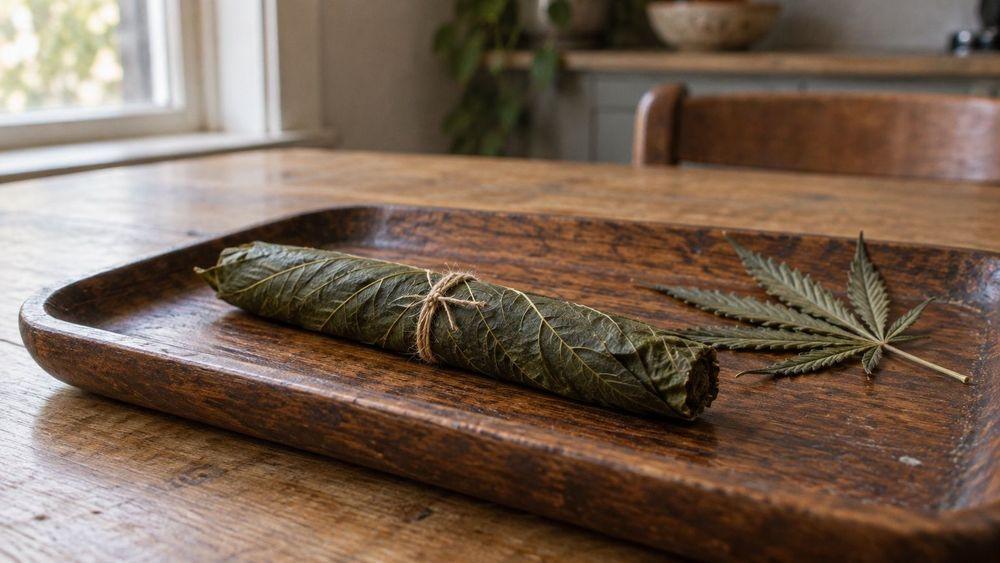
A cannagar is a cannabis cigar. Ground flower is pressed into a cigar shape around a skewer, the skewer is pulled out to leave an air channel down the middle, and the whole thing is wrapped in a leaf, usually a cannabis fan leaf. The part that matters is size: a personal-size cannagar sold as 2 to 4 grams holds the flower of roughly 6 to 12 average joints, and showpiece versions are described at more than 28 grams.
Search the word and page one is mostly sellers and mold tutorials. This guide does something different. It turns the weight into milligrams of THC you can reason about, says what the leaf and the air channel do and do not do, and gives you a label check for a cannagar you are about to buy or are handed at a party. One fact frames everything below: as of November 2026, a PubMed search for the word "cannagar" returns zero studies. Every weight and burn time in circulation is what sellers say, and we label it that way. This is an explainer for adults 21 and over. Planntz does not make or sell cannagars.
What is a cannagar?
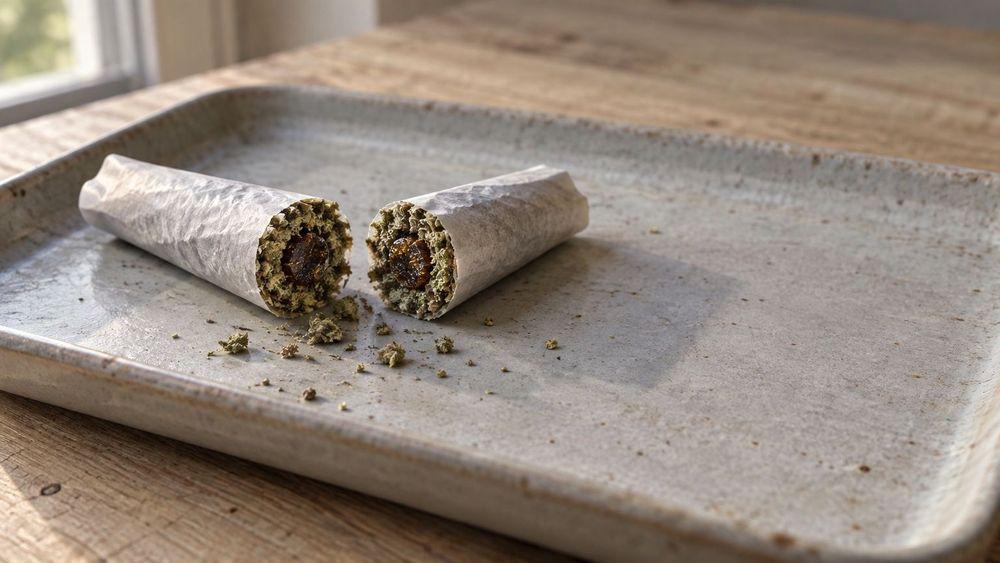
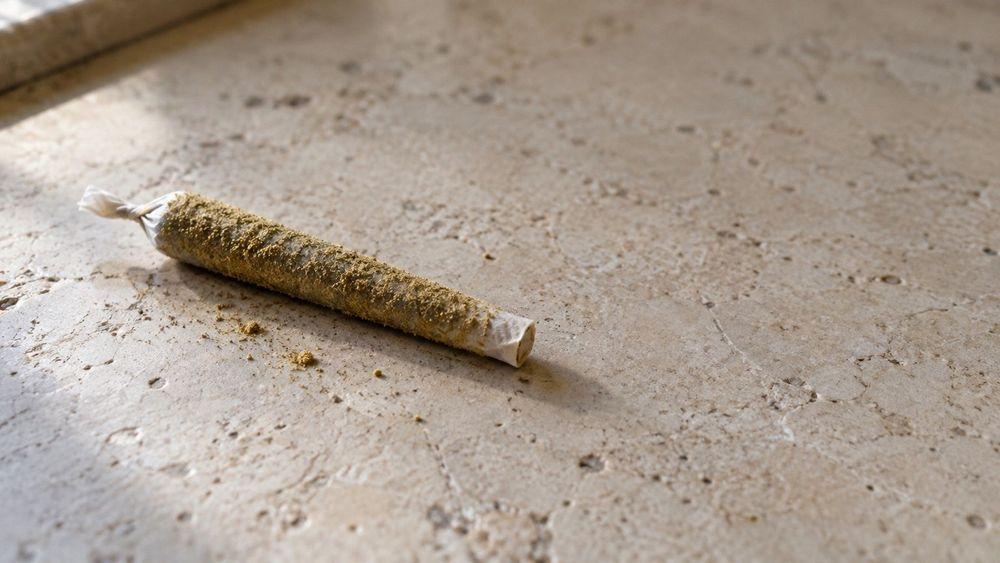
The name is cannabis plus cigar, and the shape is the whole idea. Sellers and glossaries describe the same construction. Ground cannabis flower is compressed in a cylindrical mold around a thin skewer until it forms a dense cigar. The skewer is then removed, which leaves a narrow channel down the center; a cylinder pressed that tightly would barely draw air without it. The pressed core is wrapped in leaves, most often cannabis fan leaves, and some versions add a layer of concentrate or kief, or are tied with thread or hemp wick while the leaf dries. By default there is no tobacco and no paper, and there is a lot more flower than most people put in a single roll.
- The air channel: the hollow line the skewer leaves behind. It is what lets a dense cigar draw at all.
- The flower core: ground bud, the part that carries nearly all of the THC.
- An optional concentrate layer: oil, rosin, hash or kief added in "infused" versions. This is where most extra strength comes from.
- The leaf wrap: usually cannabis fan leaf, sometimes hemp or palm leaf. A tobacco-leaf wrap makes it chemically a blunt.
- An optional binding: thread or hemp wick tied around the outside while the leaf dries.
Where the Thai stick fits
The cannagar has an older relative. Thai sticks were distinct enough to get their own category in a 2000 potency analysis of 35,312 cannabis samples confiscated in the US from 1980 to 1997, which split them out from loose marijuana, sinsemilla and ditchweed. A history of the trade by Peter Maguire and Mike Ritter, as summarized in a 2013 Santa Barbara Independent review, describes Thai sticks as seedless, potent cannabis wrapped around a bamboo sliver, in a story centered on Thailand during and after the Vietnam War. The family resemblance is the stick at the center. Online you will also find stories about ancient origins, hill tribes and opium-dipped sticks. We could not find a scholarly source for any of them, so treat them as lore.
How much weed is in a cannagar?
It depends entirely on the one you are holding. Mold makers sell personal sizes of about 2 to 4 grams, small ones of 3.5 to 7 grams and large ones of 10 to 14 grams, and one cannabis glossary describes specialty builds over 28 grams. These are sellers' numbers, not measurements, and they disagree with each other, so we do not average them into a "typical" cannagar. What you can do is the arithmetic for the specific cigar in front of you.
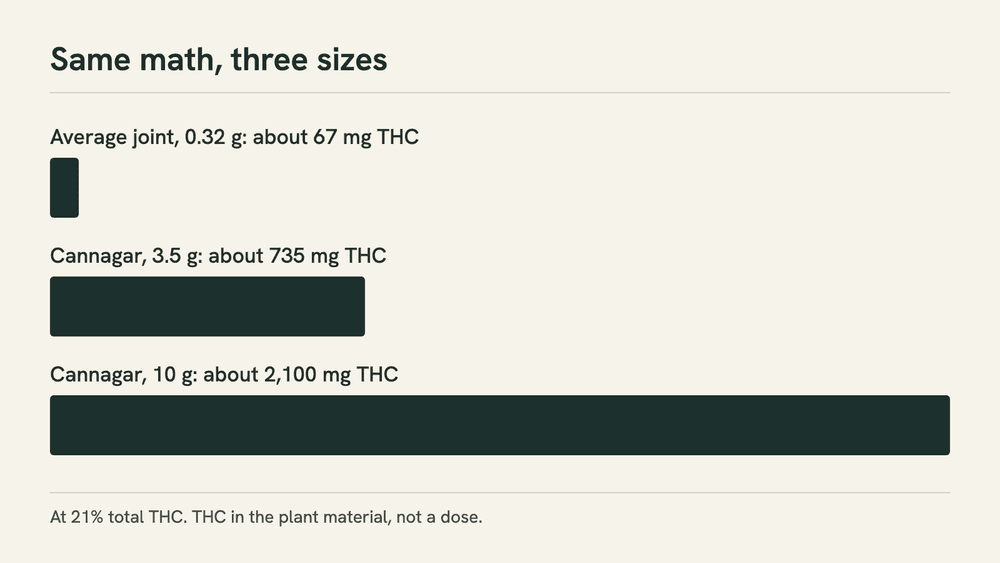
Start with a yardstick. The only data-based estimate we found puts the average joint at about 0.32 grams, inferred from 10,628 purchases reported in US arrestee interviews from 2000 to 2010 rather than weighed (our guide to grams, eighths and joint weights explains where that figure comes from). By that yardstick a 3.5 g cannagar holds the flower of about 11 joints. To turn grams into THC, multiply by the label's total THC percentage. Labs report total THC because most of the THC in raw flower sits there as THCA, an acid that turns into THC when it burns; under the federal hemp rule's formula, total THC = THC + 0.877 x THCA. For a realistic percentage, Washington's cannabis regulator reports that flower sold there averaged 21% THC in 2022. Percentage is not the whole experience, as our look at whether THC percentage matters explains, but it is the number that converts weight into milligrams.
| Cannagar weight | About this many average joints | At 15% total THC | At 21% (Washington 2022 flower average) | At 25% total THC |
|---|---|---|---|---|
| 1 g | 3 | 150 mg | 210 mg | 250 mg |
| 2 g | 6 | 300 mg | 420 mg | 500 mg |
| 3.5 g | 11 | 525 mg | 735 mg | 875 mg |
| 5 g | 16 | 750 mg | 1,050 mg | 1,250 mg |
| 10 g | 31 | 1,500 mg | 2,100 mg | 2,500 mg |
| 28 g | 88 | 4,200 mg | 5,880 mg | 7,000 mg |
Read every number in that table as THC in the plant material, not THC in you. In a 1980 study of 11 volunteers, about 18% of the THC in a smoked marijuana cigarette reached the bloodstream, give or take 6 points (the same study put a THC cookie at about 6%). That was a small study, and it is more than 40 years old. In a preliminary 2019 forensic lab test using a smoking machine, about 19 to 27% of the THC in flower was recovered from the smoke the machine collected, and the authors note that a real joint loses more to sidestream smoke, the smoke drifting off the lit end between puffs. Our inference, not a measurement: a big cigar that smolders through a long session has a lot of lit end. The leaf wrap barely changes the totals, for reasons in the next section.
What the leaf wrap does (and doesn't do)
Some sellers present the fan-leaf wrap as a premium touch. Chemically, it is far weaker than the flower it holds. In a 2020 analysis of three cannabis varieties, flowers measured about 16 to 20% total cannabinoids and fan leaves about 1 to 2%. Terpenoids, the aroma compounds, ran about 1.3 to 2.1% in flowers and 0.13 to 0.28% in fan leaves. The resin glands that make THC and terpenes, the trichomes, crowd the flowers, not the big leaves. The study covered three varieties and was funded by a cannabis testing lab, so read the numbers as a range rather than a rule. The leaf is there to hold the shape, not to add strength.
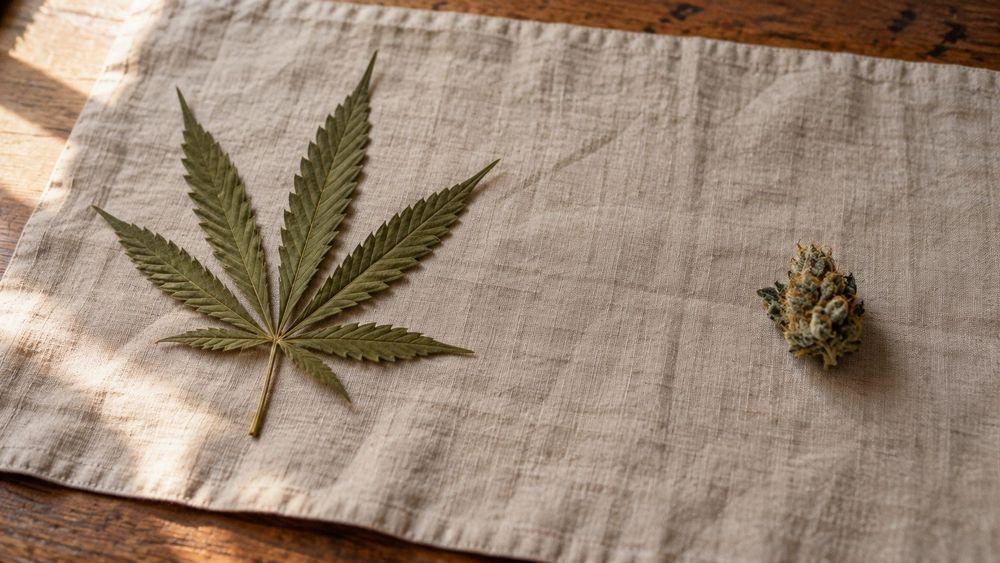
The wrap material is the one choice that changes what you inhale besides cannabis. A cannabis or hemp leaf adds plant matter and no nicotine, and some products use palm leaf. A tobacco leaf is a different story: wrapped in tobacco, a "cannagar" is chemically a blunt, and cigar wrappers tested in 2016 held 1.2 to 6.0 mg of nicotine each across five products. That is the nicotine in the wrapper, not the amount a smoker absorbs, but it is nicotine a leaf-wrapped cannagar does not have. Our blunt vs joint comparison covers what a tobacco wrap adds. For the thinner wraps used on joints, see what rolling papers are made of.
Burn time is the other number you will see advertised. Quoted burn times run from under an hour to six hours, depending on who is selling the mold, and the sellers' tables disagree with each other. We found no study that has timed one. What does follow from the build is simple: more grams means more material to burn, and a cigar that goes out and is relit lasts longer on the clock without holding any more THC. A long burn tells you about size, not about strength or what is in the smoke.
Infused cannagars: where the extra THC actually is
An infused cannagar adds concentrate to the flower: hash or kief, rosin, or an oil such as THC distillate, layered inside or brushed on the outside. That layer changes the math far more than the leaf does. Washington's regulator puts concentrates sold there at 69% THC on average in 2022, with hash oil, wax, rosin and shatter generally at 60 to 90% and kief and hash at 50 to 80%. So 1 g of oil at 69% carries about 690 mg of THC, roughly what 3.3 g of 21% flower holds. A 3.3 g cigar carrying a gram of that oil holds roughly double the THC of the same cigar without it, at almost the same size.
That is why, on an infused product, the label carries the THC total and the weight does not. California is a useful example. Its cannabis labeling rule says a plain flower product shows total THC as a percentage, so you do the weight math, while an infused pre-roll must show either its cannabinoid content in milligrams, or the flower's percentage plus the added milligrams. California's definitions call a pre-roll cannabis "rolled in paper" and an infused pre-roll one with concentrate other than kief added, so kief alone does not make a pre-roll "infused" there. The rulebook has no separate word for a cannagar, and we are not going to guess how a leaf-wrapped cigar is classified under it. The math, though, is the same anywhere: a 3 g cigar labeled 22% flower plus 1,000 mg added holds about 660 + 1,000 = 1,660 mg of THC in the product.
Smoke is still smoke
A leaf wrap avoids the nicotine of a cigar wrapper. It does not avoid smoke. When Health Canada researchers machine-smoked cannabis and tobacco the same way, the mainstream cannabis smoke (the smoke drawn through the roll) carried up to 20 times the ammonia of tobacco smoke, and the study reported hydrogen cyanide and nitrogen oxides in cannabis smoke at 3 to 5 times tobacco levels. That was a machine test with no health outcome measured. Looking at people over years, the National Academies' 2017 review found substantial evidence that long-term cannabis smoking is linked to worse respiratory symptoms and more frequent chronic bronchitis episodes. The format of a roll matters too: in a 2009 lab study of 24 blunt smokers, the same cannabis smoked in a hollowed-out cigar raised exhaled carbon monoxide more than it did in a joint (the blunt vs joint guide linked above walks through the rest). None of this research is about cannagars, because we found no study of them. The leaf changes the wrapper, not the fact of combustion. If smoke makes you cough, here is why weed makes you cough, and if a session goes too far, our guide to greening out covers the signs and when to get help.
How to judge a cannagar before you buy or accept one
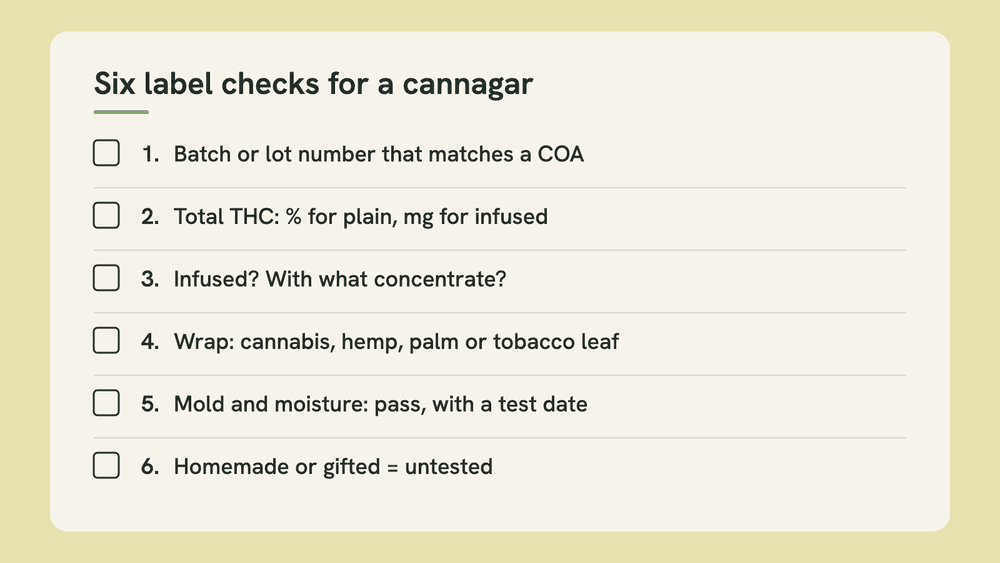
With no published study of the format, the label and the certificate of analysis (COA), the lab report for the batch, are the only evidence you get about the specific cigar in your hand. Run these six checks.
- 1A licensed seller and a batch or lot number that matches a COA. With no batch number there is no way to check anything else on this list.
- 2Total THC. On a plain cannagar it is a percentage: multiply the weight in grams by the percentage and by 10 to get milligrams (3.5 g at 21% is 735 mg in the material). On an infused one, look for milligrams.
- 3Infused or not, and with what. Oil, rosin, hash or kief layers raise the total far beyond what the weight suggests.
- 4The wrap material. Cannabis, hemp or palm leaf adds no nicotine; tobacco leaf makes it a blunt, with nicotine in the wrapper.
- 5Moisture and mold results, plus a packaging or test date. In California, anything sold to be smoked must test free of four Aspergillus mold species in a 1 gram sample, and dried flower must pass a water-activity limit of 0.65 Aw.
- 6Homemade or gifted means untested. It went through none of the checks above. If you see fuzzy white or gray spots, feel dampness or smell anything musty, do not smoke it.
The mold and moisture checks matter more for this format than for a joint. Sellers describe cannagars as being dried or cured after pressing, sometimes for days or weeks, and a dense, leaf-wrapped cylinder is a lot of plant material to keep dry. That risk is our inference from the build; we found no test of it. In California, those checks come from the state's microbial testing rule for inhalable products, reported pass or fail on the COA, and its water-activity rule for dried flower, pre-rolls included. For what healthy and spoiled flower look like, see what good weed looks like and whether weed goes bad.
Cannagars and the law
Legally, a cannagar is not a special category. It is cannabis flower, sometimes with concentrate, and it follows the same state rules as any other cannabis product. Marijuana products remain controlled substances under federal law, and adult-use sales are legal only under state law, to adults 21 and over. Size is where a cannagar can run into the rules. California's statute, for example, lets adults 21 and over possess up to 28.5 grams of cannabis that is not concentrated and up to 8 grams of concentrated cannabis, including concentrate contained in cannabis products. A 28-gram showpiece cigar sits right at the first line, and we found no guidance on how the concentrate inside an infused one counts toward the second. California's consumer guide adds that you cannot smoke where tobacco smoking is banned or within 1,000 feet of a school, day care or youth center while children are present, and that you cannot take cannabis across state lines. Other states set their own limits. This is general information, not legal advice.
Some cannagars are sold as hemp. For hemp flower, the federal hemp definition in force today sets the line at 0.3% delta-9 THC on a dry-weight basis. A 2025 appropriations law rewrote the federal hemp definition, and a 2026 law split its start date: part took effect on November 12, 2026, and the rest, including counting total THC (THCA included) instead of delta-9 alone, is scheduled for December 11, 2026. Our explainer on the 2026 hemp law tracks what has changed and what has not. For hemp sold in a cigarette format instead, see CBD cigarettes.
What we don't know
Quite a lot. As of November 2026 we found no published study of cannagars: no measured weights, burn times, THC delivery, smoke chemistry or contamination rates. The joint yardstick is inferred from purchases, not weighed. The delivery figures come from a small 1980 study of 11 people and a preliminary 2019 machine test, not from cigars smoked by people over a long session. The leaf numbers come from three varieties. The labeling and testing rules we quote are California's, and your state's may differ. What holds up regardless is the arithmetic: grams times total THC percentage gives you the THC in the material, and that number, not the shape or the wrap, is what makes a cannagar a big product. The same label-first habit works across categories, from smokables to choosing a CBD oil.
Frequently asked questions
Cannabis flower pressed around a skewer that is removed to leave an air channel, wrapped in a leaf, usually cannabis fan leaf, sometimes hemp or palm leaf. Infused versions add a concentrate such as oil, rosin, hash or kief. If the wrap is tobacco leaf, it is chemically a blunt.
Whatever the label says, because sizes vary widely. Mold makers sell personal sizes of about 2 to 4 grams and large ones of 10 to 14 grams, and specialty versions are described at more than 28 grams. We found no study that has weighed them. At about 0.32 g per average joint, a 3.5 g cannagar holds the flower of about 11 joints; at 21% total THC that is about 735 mg of THC in the material, of which only a fraction reaches you when smoked.
Seller tables run from under an hour to six hours, and they disagree with each other. We found no study that has measured it. The obvious variables are how many grams it holds, how often it is puffed, and how often it goes out and is relit. A longer burn reflects size, not strength.
Mainly the wrap. A blunt uses a cigar or tobacco leaf wrapper, and cigar wrappers tested in 2016 held 1.2 to 6.0 mg of nicotine each. A cannagar is usually wrapped in cannabis fan leaf, built around an air channel, and often holds far more flower. Both are burned, so both are smoke.
They are relatives, not the same product. A published history of the trade describes Thai sticks as seedless cannabis wrapped around a bamboo sliver, and a 2000 analysis of cannabis seized in the US from 1980 to 1997 counted them as their own category. A modern cannagar's skewer is pulled out to leave an air channel, and the wrap is usually a leaf.
Not gram for gram. The flower inside is ordinary flower, and the fan-leaf wrap is weaker (about 1-2% cannabinoids against about 16-20% in flower in one 2020 analysis). A cannagar is simply bigger. Infused versions are the exception, because concentrate at 60 to 90% THC can add more THC than the flower itself.
The press used to shape one: a tube-shaped form, usually with a skewer through the middle. It has nothing to do with fungus. Fungal mold is a separate check: on a licensed California product, the COA reports pass or fail for four Aspergillus species, along with a water-activity result.
Want to check a cannagar for yourself? The label numbers above only mean something once you can match them to a lab report. Our guide on how to read a certificate of analysis shows where total THC, moisture and the microbial pass or fail sit on a real COA, and what a missing batch number tells you.
Writing about hemp, wellness and the small rituals that keep us balanced.