Joint Canoeing: Why One Side Burns and What Each Fix Costs
When one side of a joint burns ahead of the other, the cause is usually air, density or moisture, not bad weed. Here is the burn physics, a table to diagnose your canoe, the moisture number that matters, and what each common fix costs.
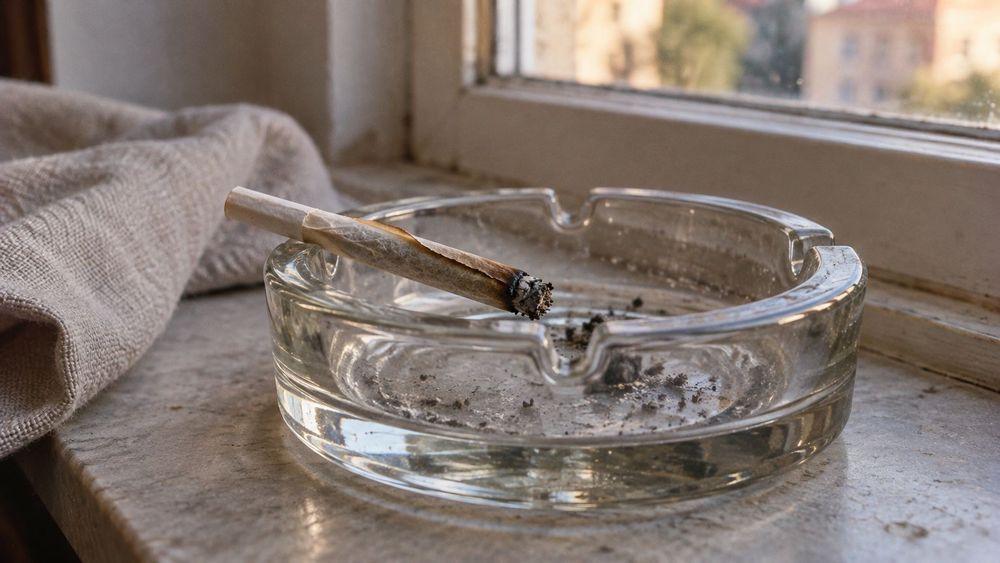
Joint canoeing is when one side of a joint burns down faster than the other, leaving a curl of unburned paper on the slow side that looks like the hull of a canoe. It happens because the fast side gets more air, holds less material or is drier. It is a construction and moisture problem, not a sign that the weed is bad.
The short version: a lit joint is a slowly smoldering cylinder, and the burn chases oxygen and thin spots. A loose seam, a lumpy grind, a damp patch, a lopsided light or a gust of wind gives one side a head start, and once that gap opens it tends to grow. Most of what is known about how this kind of burn works comes from cigarette research, not joint research, and we say so wherever it carries the argument. This is general information for adults 21 and over where cannabis is legal. It is not a rolling tutorial, and Planntz does not sell flower or pre-rolls.
What joint canoeing is, and how it differs from running and tunneling
People use a handful of words for a joint that burns wrong, and they describe different shapes. Telling them apart is the first step in working out why it happened, because each shape points to a different cause.
- Canoeing: one whole side burns down ahead of the other. The slow side's paper curls and browns like a boat hull.
- Running: a narrow line of burn races down the joint, usually along the seam where the paper overlaps or the glue sits.
- Tunneling or coring: the center burns down while a ring of paper and flower stays unburned around the outside.
- Going out: the coal dies between puffs. Often the same joint that canoes also goes out, for related reasons.
Why does it matter beyond looks? A joint keeps smoldering between puffs. When one side runs, flower and paper on that side burn off into the room as sidestream smoke instead of being smoked, and the lagging side often needs relighting. That smoke is not trivial: when a Health Canada machine-smoking comparison of cannabis and tobacco smoke measured the sidestream smoke that drifts off a lit tip, polycyclic aromatic hydrocarbons were higher in the cannabis smoke than in the tobacco smoke. That study measured chemistry on a machine, not health outcomes, but it is a reason not to let a canoe smolder unattended in a shared room.
Why is my joint canoeing? A joint is a smoldering cylinder
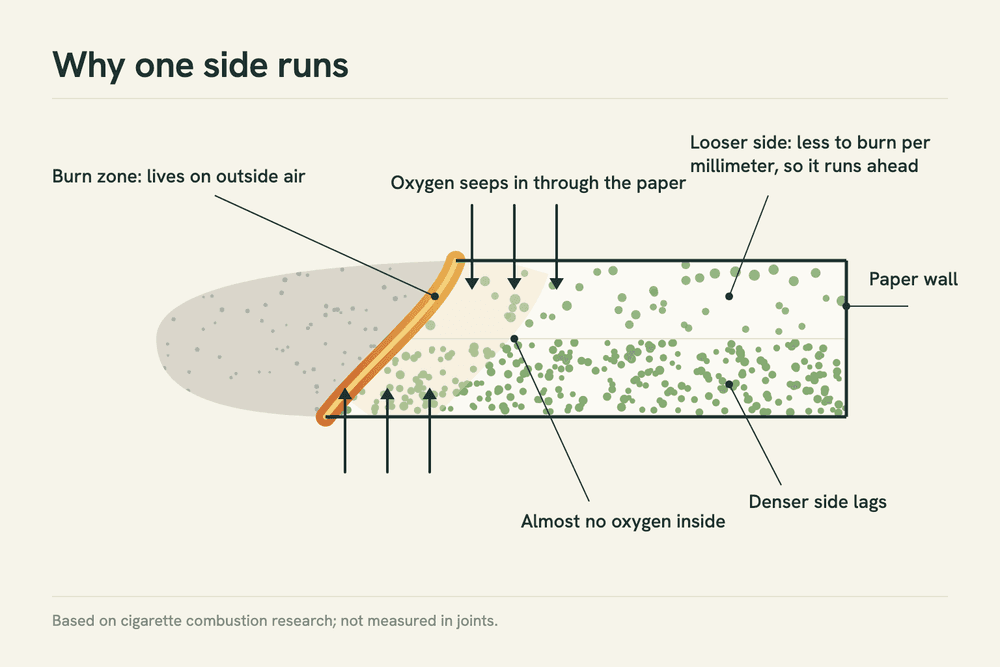
No published study has measured how the burn line moves along a joint; our PubMed searches in November 2026 found none, and the two small industry burn tests covered below did not look at it either. What does exist is decades of cigarette fire-safety research, and a joint is the same kind of object: dried plant matter wrapped in thin paper, burning slowly from one end. A 2010 review of cigarette ignition research in *Fire Technology* describes how the coal stays alive: oxygen "is transferred from the surrounding air by diffusion across the paper wrapper," and the paper's permeability regulates how much gets in. Inside, the coal is starved. A 1978 UN laboratory study of how cannabinoids behave during smoking cited measurements of less than 0.1% oxygen just behind a cigarette's glowing zone, and described smoking as "to a large extent an anaerobic process." The burn lives on whatever oxygen seeps in from outside, which is why the side with the easiest airflow leads.
The same review names the second variable. In cigarettes, "tobacco density is the primary factor affecting linear burn rate," meaning how tightly the leaf is packed sets how fast the burn line travels. A loose side of a joint has less material per millimeter to heat, so the burn moves through it faster. Put air and density together and you get the feedback loop behind most canoes: once one side pulls ahead, more of its glowing surface is exposed to open air, while the slow side sits behind a curl of paper. That loop is our reasoning from the cigarette physics, not a measured result, but it explains why a small head start rarely evens itself out.
The paper matters as much as what is inside it. Factory cigarette paper is often dosed with citrate salts; the 2010 review notes that potassium citrate made the paper's cellulose start to break down at a lower temperature, which helps it keep burning. In a 2003 New Zealand test of hand-rolled and factory cigarettes, researchers left lit cigarettes on filter paper following a standard fire test. All 40 factory cigarettes burned their full length; none of the 40 hand-rolled ones did. Then they rewrapped the same factory cigarettes in hand-rolling paper, and 0 of 40 burned to the end. The hand-rolling paper carried under 0.08 mg of citrate, against 0.3 to 0.8 mg in the factory papers.
“The wrapping paper is a key determinant of whether or not unpuffed cigarettes burn their full length.”
A 2005 comparison of New York's fire-safe cigarettes with brands sold elsewhere shows the same principle from the other direction. When New York required cigarettes that tend to self-extinguish, the researchers concluded that makers got there mainly with thin bands of less porous paper. Only 10.0% of those cigarettes burned their full length unattended, against 99.8% of the comparison brands. Cutting off air at one ring was enough to stop the coal.
For joints, the translation is this: rolling paper is not engineered to keep a coal burning evenly between puffs, so small differences in airflow and packing show up quickly, and joints go out often. All of the numbers above come from tobacco; applying them to cannabis is a reasonable inference, not a tested one. What rolling papers are actually made from, and which additives they may or may not carry, is covered in our breakdown of rolling paper materials.
Diagnose your canoe: symptom, cause, check and cost
Start with what you can see, then work back to the most likely cause. The table pairs each shape of uneven burn with what usually produces it, the one thing worth checking, the fix people reach for, and what that fix costs you. Where a row has no study behind it, the table says so.
| What you see | Likely cause | What to check | Common fix | What the fix costs |
|---|---|---|---|---|
| A thin line races down the seam | The seam or glue line is looser or thinner than the rest of the paper, so air gets in there first | Where the run started; whether the seam is gapped or lumpy | Rotate between pulls; dampen the leading edge with a little water | A wet patch that has to dry before it burns |
| One side burns down within the first few pulls | Lit from one side, or a hard first pull before the end was glowing all the way around | Whether the glowing end is a complete ring | Touch the flame briefly to the unlit part of the tip | One more open flame on paper |
| A lumpy side lags behind | A chunk of bud or a stem makes that side denser | Grind size and stems | Next time, a more even grind with stems picked out | Nothing now; the lumpy side may need a relight |
| The whole joint keeps going out | Damp flower, or a hollow, under-packed paper | Whether buds feel spongy instead of springy; jar humidity if you have a hygrometer | Let damp flower dry back into range before rolling | Relighting and harder pulls until then |
| It burns fast, hot and harsh | Overdried flower, below about 0.55 water activity | Buds crumble to dust; a jar hygrometer reads under 55% | Bring the flower back into range | Time; kitchen tricks such as citrus peel can overshoot into mold territory |
| It only runs outdoors or near a fan | Moving air feeds extra oxygen to the windward side | Whether the same joint behaves indoors | Shield it from the breeze | Nothing |
| An empty flap of paper races ahead | The paper or cone is under-filled near the tip | Whether the fill reaches the shoulder of the paper | Pinch off or trim the empty flap | Some paper char and a little flower |
| A pre-roll runs from the first light | Uneven machine fill; fine shake packs differently from ground bud | Squeeze gently along the cone for soft spots | Rotate between pulls | Flower lost as smoke between puffs |
| An infused or kief-coated joint runs | An uneven coating of concentrate or kief changes how each side burns | Visible patches of coating | Rotate between pulls | Unknown; no study has looked at this |
A few rows deserve a pointer. Stems burn differently from bud and leave a stiff, dense spot; our guide to weed stems covers what they are and what people do with them. If your flower is the problem, our guide on how to rehydrate weed walks through bringing dry buds back into range without overshooting. And for coated joints, what hash and kief are explains why a sticky layer does not spread evenly.
Moisture: the cause you can put a number on
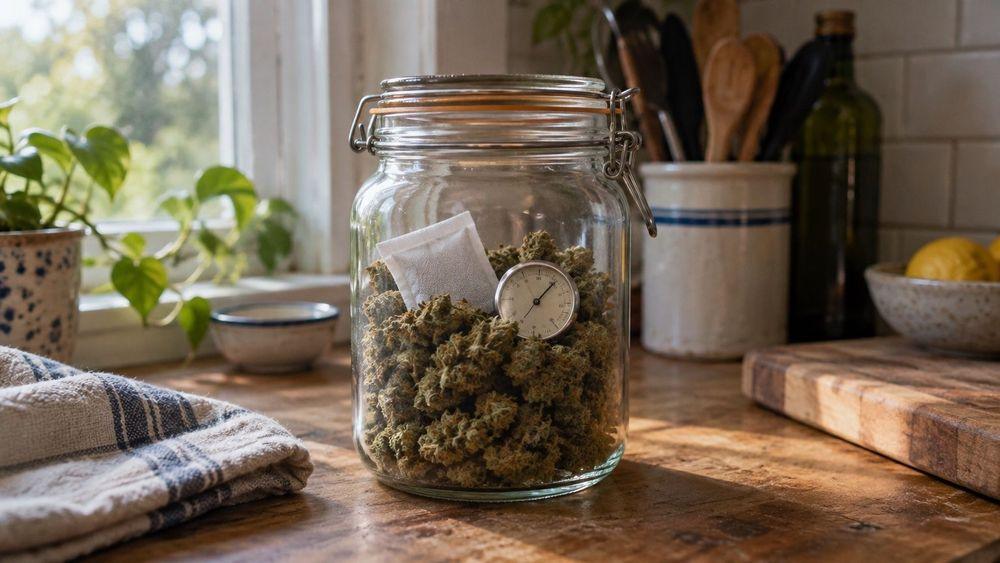
Moisture is the one cause of canoeing that has an agreed number attached. The number is water activity, a 0-to-1 measure of how much water in a material is free to move. At equilibrium it maps directly onto humidity: a food-safety report prepared for the FDA gives the conversion as equilibrium relative humidity equals water activity times 100. So flower sealed in a jar where the air settles at 60% humidity sits at a water activity of about 0.60. California's cannabis testing rule will not let dried flower be sold above 0.65. An industry standard for dried cannabis flower, ASTM D8197, sets a range: below 0.65 to guard against mold, and above 0.55 to prevent "physical damage (breakage)" in handling. The standard is a voluntary consensus document, not law, and we worked from its published summary.
What happens at either end? In a 2025 industry-funded test of water activity and smoking quality, researchers made 1 g cones from one hemp cultivar at 0.45, 0.65 and 0.85 water activity and ran all three on a smoking machine. The 0.45 and 0.65 cones also went to 315 consumers and 38 experts; the 0.85 ones were held back from people because of the microbial risk. The 0.45 pre-rolls were rated more irritating than the 0.65 ones. The 0.85 pre-rolls had noticeably more pull resistance, and their smoke carried only about 30% of the cannabinoids measured at 0.65. Keep the limits in view: one cultivar, a trade journal rather than a peer-reviewed one, sponsors that include humidity-pack and pre-roll companies, and no score for canoeing at all. The direction matches basic fire science. In lab burns of four shrub species, wetter fuel produced more products of incomplete combustion, mostly carbon monoxide and hydrocarbons, because water has to boil off before plant matter burns, which cools the fire. That was shrubland fuel, not cannabis, so read it as the general principle.
Here is how moisture turns into a canoe. A joint is rarely one uniform material. Ground flower from the outside of a jar can be drier than flower from the middle, buds from two jars may sit at different humidity, and one dense, damp nug can end up along one side of the paper. The drier side lights easily and burns fast; the damper side resists. No study has measured canoeing against moisture, so treat this as the physics applied, not a finding. The practical upshot: if your joints both run and go out, check the flower before blaming your rolling. How weed ages in storage, and the storage conditions that were actually measured, covers how to keep a jar in range.
Grind and packing: density sets the burn speed
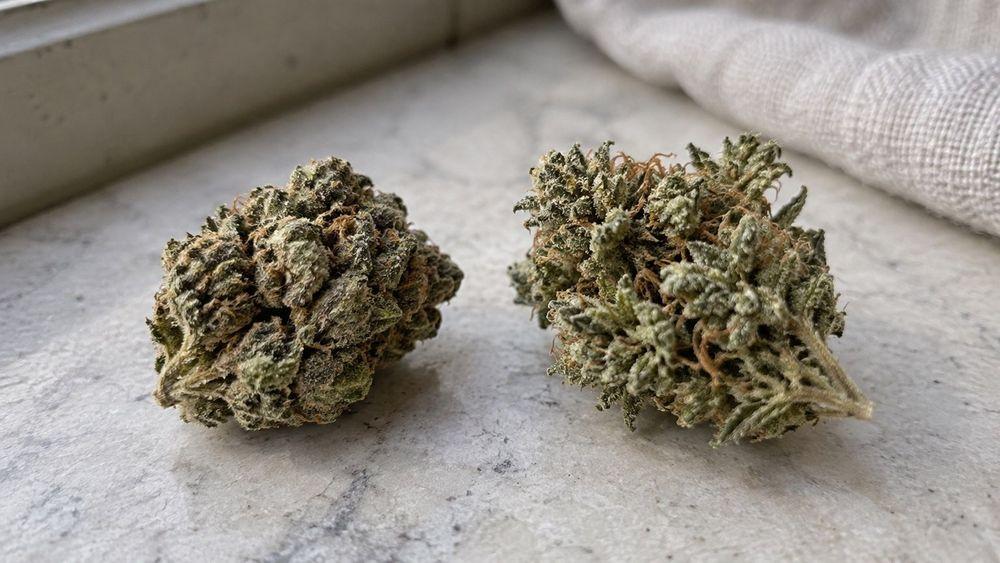
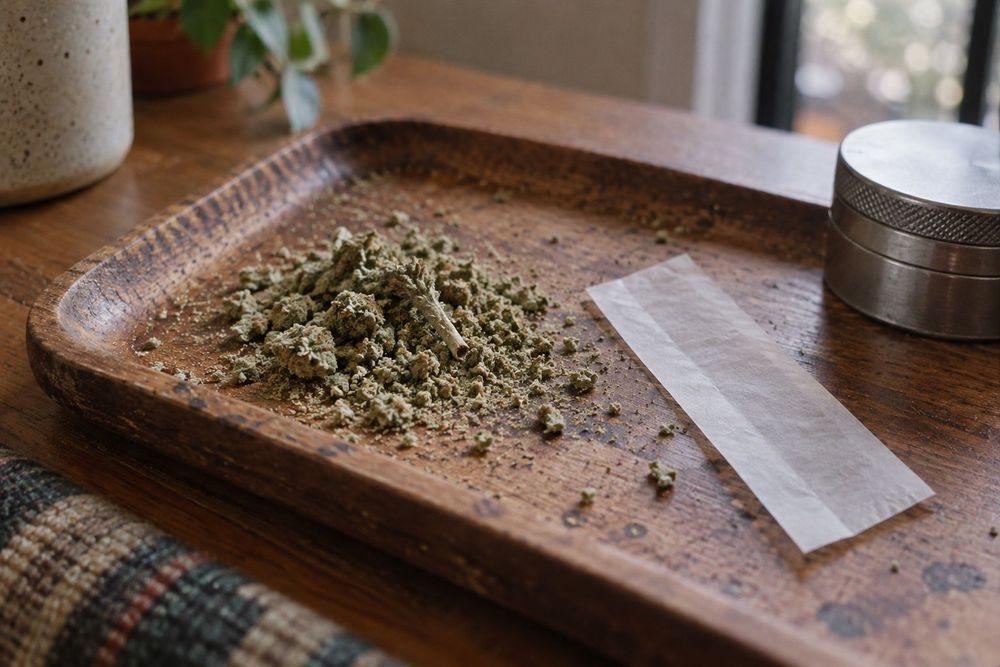
If density sets burn speed in cigarettes, particle size should matter in joints, and one small test suggests it does. In a 2023 lab study of particle size and joint smoking, researchers sieved flower to 1, 3 or 5 mm, rolled roughly 0.5 g joints from a THC-dominant and a CBD-dominant flower, and burned three of each on a smoking machine, 18 joints in all. Finely ground THC flower burned out in 28 machine puffs; the 3 and 5 mm grinds took 52 to 54. The 3 mm joints were "struggling to stay lit during the second half of burning," and the 1 and 5 mm replicates smoked less consistently from joint to joint. This was a small industry lab test published in a trade journal, not peer-reviewed, and it did not score canoeing. What it shows is that particle size alone changes how a joint burns, which means a mix of fine dust and coarse chunks inside one paper gives you two burn speeds side by side.
The paper itself is part of the fuel. A 2024 *ACS Omega* analysis of 53 rolling papers, wraps and cones estimated that paper makes up about 10 to 15% of the mass of a typical cannabis smoking product, and noted that many people fill papers to around half capacity, which raises the amount of paper burned per gram. Our inference from that: an under-filled stretch of paper is both more paper in each puff and the spot most likely to run, because there is almost nothing behind it to slow the burn.
None of this needs a rolling technique to act on. It is a list of variables to look at when a joint misbehaves:
- Particle size: is the grind roughly even, or a mix of dust and whole chunks?
- Stems and seeds: anything hard and dense will burn on its own schedule.
- Fill: does the flower reach the shoulder of the paper, or is there an empty flap at the tip?
- Hollow lanes: a channel of loose fill along one side is a ready-made path for the burn.
- Seam: is the overlap flat and even, or gapped and lumpy in one place?
- Filter or crutch: is it seated straight? A crooked one can leave one side looser.
Blunts and joints behave differently here, because a tobacco-leaf wrap is thicker and burns on its own terms; our comparison of blunts and joints covers the format differences. If you use a filter, what a roach or crutch is for explains how it changes the draw at the mouth end.
How to stop a joint from canoeing, and what each fix costs
Every page on this topic lists the same handful of fixes. Fewer mention that most of them trade one problem for another. Here is what people do once a joint starts to run, what each move actually changes, and what it costs. None of these makes smoking safer, and the cheapest ones are the gentlest.
| Fix | What it does | What it costs | Evidence |
|---|---|---|---|
| Rotate between pulls | Spreads airflow around the tip so no side stays upwind | Nothing | Follows from the airflow physics; not tested on joints |
| Tilt so the lagging side is on top | Lets rising heat reach the slow side | Nothing | Plausible physics; nobody has tested it |
| Dampen the leading edge with water | A wet patch must dry before it burns, which slows the fast side | Wet paper smolders less cleanly while it dries | Our reasoning from fire science on wet fuel |
| Lick the fast side | Same as water: wets the paper | On a shared joint, your saliva goes to everyone after you | Common sense; water does the same job |
| Touch the flame to the slow side | Lights the lagging edge so the ring evens out | Another open flame on charred paper | One cigarette study found lighter and match first puffs broadly similar |
| Stub it out and relight | Resets the coal | A fresh flame and usually a harder draw to restart it | Tobacco relighters did not reduce toxicant exposure |
| Pull harder to drag the slow side along | Draws more air through the whole tip | More smoke per puff; the costliest fix | Puff size drove carbon monoxide intake in controlled studies |
| Trim the runner or tap the ash | Removes the flap or ash that is leading | Lost flower; loose hot ash | Practical; no study |
| Let it burn out | Nothing; the canoe finishes on its own | Flower lost as sidestream smoke into the room | Practical; no study |
On lighting: the one lab study that compared ways of lighting a cigarette found a gas lighter and a match gave a first puff that "was usually similar," while a candle added substances such as benzene, most likely from the wax. That was tobacco and the first puff only. Each relight is another flame on charred paper, but switching flame types does not change what the burning plant itself makes. Our guide to hemp wick goes deeper on lighting options and what the evidence does and does not show.
On relighting: nobody has studied it in joints, but tobacco researchers have checked whether it saves anything. About half of 434 daily smokers in a 2007 Ontario survey said they relight at least some of the time. In a 2019 study of 248 adult smokers, 69.4% relit, and relighting showed no significant link to blood cotinine or exhaled carbon monoxide. And in a 2026 analysis of 275 smokers from two trials, people who relit smoked fewer cigarettes a day (13.1 versus 14.9) but did not take in fewer smoke toxicants, possibly because they smoked each cigarette harder. After adjustment, no per-cigarette biomarker differed significantly, and the authors suggest the differences may mostly reflect who relights. These are observational tobacco studies, so treat them as a hint, not a verdict on joints.
On pulling harder: this is the fix with the clearest cost. In a 1995 controlled marijuana smoking study, the size of each puff drove how much THC and carbon monoxide people took in, dose by dose; it used seven participants per experiment and 1990s cannabis, so the exact numbers are dated. A 1988 crossover study of 15 men in the *New England Journal of Medicine* found smoking marijuana delivered about three times the tar of tobacco, largely because the puffs were about two-thirds larger and held deeper. Hauling on a canoeing joint to drag the slow side along is exactly that pattern. For what smoke does to your airways, see why weed makes you cough.
Why pre-rolls canoe
Pre-rolls canoe for slightly different reasons than hand-rolled joints. A machine fills a ready-made cone, and fill density can vary along the cone and from one cone to the next. Pre-rolls are often filled with small material, and fine shake packs differently from freshly ground bud: it can settle into dense pockets in one place and leave airy gaps in another. Our guide to shake explains what it is and why it behaves that way. Cones also have a twisted tip that can light unevenly, and a sealed tube is a small storage space: flower inside will drift toward whatever humidity it holds, so a pre-roll that sat somewhere warm or damp may not be the pre-roll that left the packager. That last point is the water activity logic applied, not a measured result.
Testing does not catch any of this. In California, the state's testing rule for pre-rolls requires them to be rolled, packaged and labeled before compliance testing, so the lab sees the finished product, paper and all. That testing covers contents such as cannabinoids, contaminants and moisture; nothing in it scores how evenly a pre-roll burns.
Is canoeing a sign of bad weed?
No, and there is no evidence that it is. As of November 2026 we found no published study of joint canoeing, and none linking an even burn to potency, purity or how well flower was cured. Our PubMed searches for canoeing or uneven burn alongside cannabis, marijuana or joints returned 31 records, and none were about burning joints. The two cannabis burn tests that do exist, the grind study and the water activity study above, did not score canoeing either. A beautifully grown, well-cured bud can canoe if it is rolled loosely or lit from one side, and mediocre flower can burn evenly in a well-packed paper. The same logic applies to the ash-color myth, which our look at white ash versus black ash takes apart.
What does actually tell you about flower quality:
- A batch lab report (certificate of analysis) with cannabinoid results that match the label.
- Water activity or moisture on that report, ideally within 0.55 to 0.65 for dried flower.
- Passing results for microbes, mycotoxins, pesticides and heavy metals, where your state requires them.
- No fuzz, webbing, dark spots or musty smell. If you see or smell any of those, do not smoke it.
If you have never read one, our step-by-step guide to reading a COA shows where each of those results sits on the page. For the visual and smell checks, what good weed looks like covers the signs worth trusting and the ones that are mostly folklore.
What we still don't know
- How the burn line moves along a joint, measured directly. Nearly all the burn physics here comes from cigarette research.
- Whether moisture, grind or paper type predicts canoeing. The two cannabis burn tests were small, industry-run and did not score it.
- Whether any rolling paper burns more evenly than another. No independent comparison exists that we could find.
- Whether relighting a joint changes what you inhale. The relighting data are all tobacco.
- Whether tilting, rotating or wetting a joint works as well as people say. These are practical habits, not tested methods.
Questions people ask about joint canoeing
One side is getting more air, has less material, or is drier than the other. In cigarette combustion research, the coal feeds on oxygen that seeps in through the paper, and packing density sets how fast the burn line moves. A small head start on one side tends to grow, because the leading side has more glowing surface exposed to air.
Usually a lopsided light, a loose seam, uneven grind, or wind. If it happens in the first few pulls, the tip probably was not glowing all the way around when you started. If it happens indoors and out, look at the grind and how evenly the paper is filled.
The cheapest moves are rotating it between pulls and keeping it out of moving air. People also dampen the fast edge with a little water or touch a flame to the slow side. Pulling harder to drag the slow side along is the costliest fix, because bigger puffs mean more smoke in each one.
There is no joint data. In tobacco studies, people who relit cigarettes did not take in fewer smoke toxicants than people who did not, possibly because they smoked each one harder. Each relight is another flame on charred paper and usually a harder draw to get it going again.
In practice, yes: drier plant material lights easily and burns quickly. In one 2025 industry-funded test, pre-rolls at a water activity of 0.45 were rated more irritating than the same flower at 0.65. Below about 0.55, an industry standard notes flower also starts to crumble.
Machine fill density can vary along a cone, fine shake packs unevenly, twisted tips can light unevenly, and a sealed tube can let flower drift drier or damper depending on where it was kept. California tests pre-rolls in finished form, but burn evenness is not part of that testing.
It works only because it wets the paper, and water does the same job. On a shared joint, your saliva goes to everyone after you. Either way, a wet patch has to dry before it burns, which slows the fast side for a moment.
No. We found no study linking canoeing to potency, purity or cure. It is mostly about construction and moisture. A batch lab report, including moisture and contaminant results, tells you far more about quality than how a joint burns.
Most canoes come down to air, density and moisture, and most fixes trade a little waste for a little more smoke. If what you really want is less combustion overall, the variable that matters is the heat source, not the roll: our comparison of dry herb vaporizers and smoking lays out what changes when you heat flower instead of burning it.
Writing about hemp, wellness and the small rituals that keep us balanced.